
Camping Without Wrecking Your Back: A Calgary Chiropractor's Guide
You Love Camping But Your Body Doesn't Always Agree
If you're heading out to Kananaskis, Waterton, the Bow Valley, or across the border into BC for a weekend of camping, you already know the whole experience is worth it — the campfires, the quiet, the mornings by the water. What you might not know is why you come back stiffer, sorer, and slower-moving than you left.
Camping puts your body through a specific set of physical demands most people don't plan for.
Here's the honest version. Most camping-related back and neck pain comes down to four things: the drive to get there, the way you sleep once you arrive, the way you sit around the fire, and the physical work of setting up and packing down.
All four are addressable, and small changes make a bigger difference than you'd expect. Here's the practical guide.

The Drive Is Where It Often Starts
A three-hour drive to a campsite before you've even unpacked is genuinely hard on the low back. Sustained sitting compresses the discs of the lower spine, hip flexors shorten, and by the time you arrive you're already stiff before you lift a single piece of gear.
Take breaks even if you don't feel like it. Every 90 minutes, stop for a couple of minutes. Walk around the car, do a few gentle side-bends and rotations, refill water. You'll arrive in better shape than someone who powered through.
Adjust the seat before you go, not partway through. Lumbar support (either the built-in kind or a small rolled towel), seat tilt slightly reclined, and mirrors set for good posture rather than a forward-leaning driving position. Small setup investments before a long drive pay off across three hours.
Alternate drivers if you can. Even swapping every 90 minutes changes the loading pattern on both people.
Don't lift immediately. When you arrive, walk around for a few minutes before hauling coolers, tents, or heavy bags out of the car. Going straight from three hours of sitting to lifting is exactly the setup for a strain.

Setting Up And Packing Down
Setting up camp involves a lot of the mechanical patterns that irritate backs — bending over to drive tent stakes, awkward twisting to unload gear, lifting bulky items from the trunk, wrestling with a heavy cooler. And packing down at the end of a weekend adds fatigue and often rushed movement into the same patterns.
Squat rather than bend for ground work. For tent stakes, gathering firewood, or working with anything low, drop into a squat rather than folding forward at the waist. Your knees will handle it better than your low back will.
Two smaller trips beats one heavy one. Coolers, water jugs, and heavy bags aren't a place to prove anything. If the cooler needs both hands, don't also carry a chair.
Get help with the awkward stuff. Tents that require two people are always easier with two people, even if you can do them alone. Same with lifting a full cooler into the truck.
Warm up before the physical work. A short walk plus some gentle mobility (rotations, hip openers, arm swings) before starting a setup makes cold-muscle strains less likely.
Pace the packing. The end-of-trip pack-down is often where back tweaks happen because people are tired, hurried, and trying to hit a specific departure time. Build in an extra 30 minutes to your pack-down and slow down the lifting.

Where You Sleep Matters More Than You Think
Sleep on a camping trip is often the biggest single driver of a sore back on day two. Getting the sleep setup right is worth actual thought before you leave, not last-minute at the site.
Sleeping bag pads and mats. The difference between sleeping directly on the tent floor and sleeping on a proper insulated pad is significant. For anyone with an existing back issue, thicker is better — self-inflating pads that are 5-10 centimetres thick provide meaningful cushioning and insulation from the cold ground. Foam pads work but flatten under body weight. Air mattresses are comfortable but often colder and less supportive than good self-inflating pads.
Size matters for actual sleep. A pad that's too short (feet or head hanging off) means pressure points and disturbed sleep. Getting a pad long enough for your full height, wide enough that your shoulders and hips don't roll off, is a real quality-of-sleep improvement.
Pillow strategy. Pack a real pillow if you have space, or use a compressible camping pillow. A rolled-up sweater or jacket works in a pinch but usually flattens overnight, leaving your neck in an awkward position by morning. If neck stiffness is a common problem for you when you camp, packing your regular pillow is genuinely worth the space.
Sleeping bag position. Side-lying with a small pillow between the knees is the friendliest sleeping position for most backs, and it works fine in a sleeping bag. Back-lying on a good pad also works. Face-down (stomach) sleeping is usually harder on the neck and low back — try to break the habit even on camping trips.
Cot vs. mat vs. air mattress vs. camper bed. For anyone with significant existing back problems, a proper camping cot with a pad on top is genuinely the most back-friendly setup — it gets you off the cold ground and provides better support than mats alone. For car camping where weight isn't limited, it's worth the packing space. For backpacking, a good self-inflating pad remains the practical option.
Camper trailer beds. RV and camper mattresses are famously bad. If you camp regularly in a trailer, a proper mattress topper (memory foam or high-quality foam) transforms the sleep experience. Worth the investment if this is your regular setup.

Sitting Around The Fire
Camp chairs and campfire seating are the postural equivalent of what you'd design if you wanted to make backs hurt. Low seats, no back support, sitting close to the ground for hours at a time — cumulatively it's a lot.
Bring a chair with actual support. The cheap folding camp chairs everyone has are fine for an hour. For a whole evening, a chair with genuine lumbar support (or a chair you can add a small cushion or rolled towel to) makes a real difference. Higher-back camp chairs with real structure are worth the cost if you camp often.
Watch the sitting-low positions. Sitting on a log, cooler, or short stump for hours puts your knees higher than your hips, which flexes your low back significantly. It feels fine for a while, but the cumulative loading catches up. If low seating is what's available, get up and move every 30 minutes or so.
Rotate positions. Alternate between chair, standing, walking, and (if it's safe and comfortable) some short stretches. Sustained anything is harder than variety.
Cross-legged on the ground has a place — briefly. For most adults, sitting cross-legged on the ground for extended periods puts significant load on the hips and low back. Fine for a short conversation, hard on the body for hours.
The Practical Kit
Some small things worth having along that materially reduce camping-related back pain:
A lumbar support cushion or small pillow — works in the car, in a chair, behind you around the fire
A proper sleeping pad appropriate for your body and comfort needs
A real pillow, or a good camping pillow
Ibuprofen or acetaminophen if you use them (worth checking with your doctor if you're unsure)
A hot water bottle if you're camping in cooler weather — warmth on a stiff low back before bed helps
None of these change the experience — they just reduce the "why does my back hurt" tax on the whole trip.
The Return Home And Recovery Week
Getting home from a camping weekend often means another long drive plus unloading a full vehicle. The same drive strategies apply on the way back, plus:
Unload gradually rather than everything at once
Sleep in your own bed the first night home
Stretch the low back gently before bed
Give yourself a lighter movement day on Monday if your back is stiff
Most camping-related soreness settles within a few days of returning to normal life. If something specific isn't settling, it's worth getting it looked at rather than pushing into the next weekend on top of it.
When Camping Pain Isn't Just Camping Pain
Most post-camping back and neck pain is standard mechanical soreness that settles with rest and time. Some symptoms warrant more attention:
Pain that's worsening rather than settling after several days home
Numbness, tingling, or weakness anywhere — especially down a leg or into an arm
Sharp pain that changes your posture or gait
Any specific injury during the trip (a fall, a strain, an awkward twist) that isn't clearly resolving
Bladder or bowel changes after a trip
For anything with red-flag features — progressive weakness, loss of bladder or bowel function, severe worsening pain — that's same-day medical care, not the assumption it's just camping fatigue.
For head impacts from any falls on trail or around the site, the concussion picture matters — see our post on concussion.
The Bottom Line
Camping-related back and neck pain comes down to the drive, the sleep setup, the sitting patterns, and the physical work of setup and pack-down. All four are addressable, and small investments — a better pad, a supportive chair, driving breaks, a proper pillow — make a bigger difference than any single intervention. Most soreness settles within a few days of getting home. What doesn't settle, or worsens, means an assessment is worth booking rather than continuing to wait.
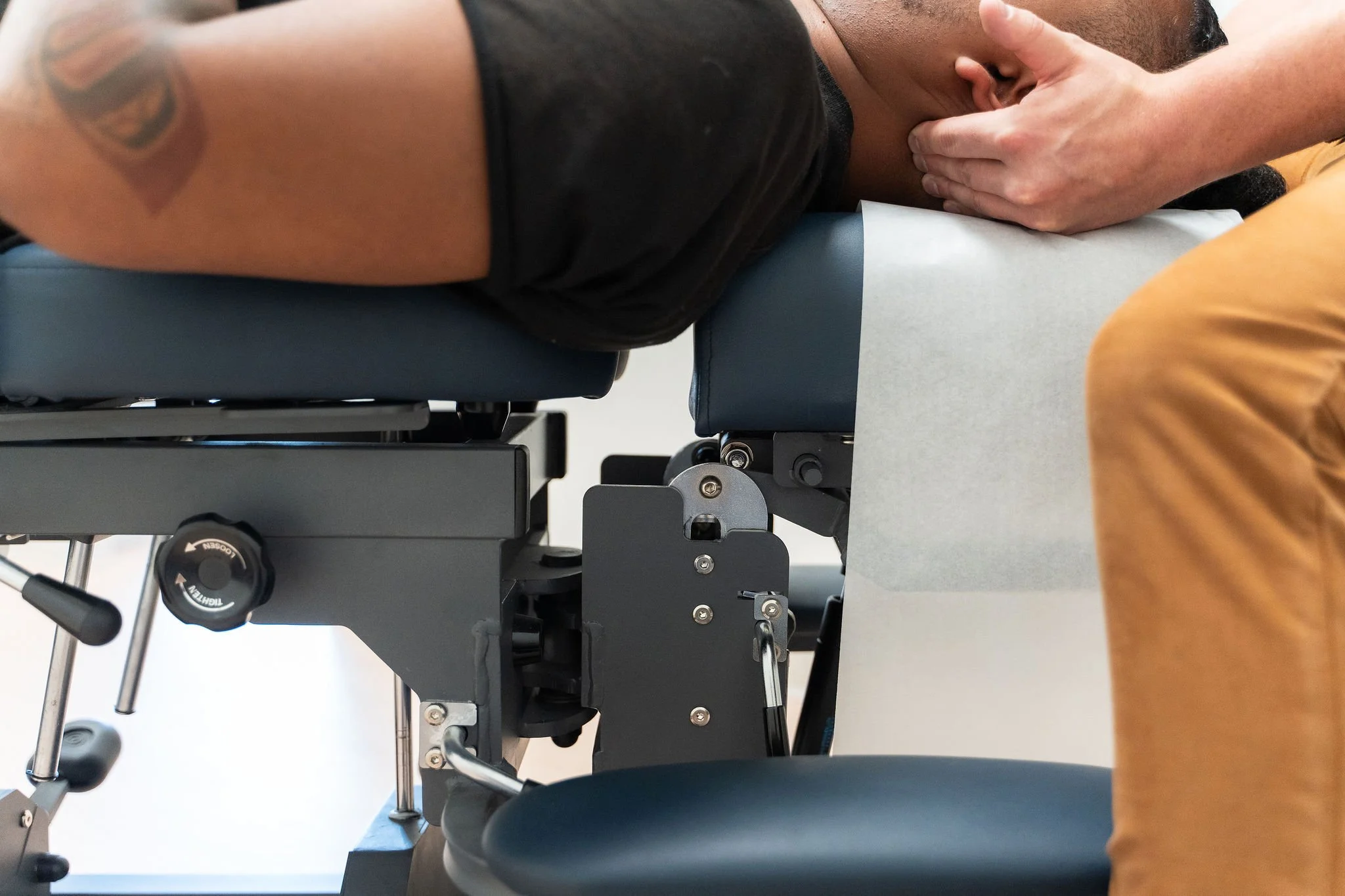
If you're heading into the summer camping season and want to head off the recurring problem before it starts, or you're coming off a trip that left you stiffer than expected, an assessment can help identify what's specifically driving your case. You don't need a referral to be seen. Axiom Chiropractic is in Hillhurst at 113 19 St NW, free parking on all sides. Book an assessment — and enjoy the campfire without paying for it Tuesday.