
The Three Things I See Most In October
What Actually Walks Through The Door This Month
October is a distinctive month in this clinic. I see the same three patterns come through the door every year, and once you notice them, they're impossible to unsee. If you're dealing with something specific right now and wondering "is this normal for this time of year" — the honest answer is often yes, and knowing why is half the battle.
Here are the three most consistent patterns I see in October, why I think they show up when they do, and what I usually recommend.

Pattern One: The Summer Injury That Finally Can't Be Ignored
The most common thing I see in October is the low back complaint that started sometime in July or August but got ignored, worked around, and pushed through until the person could finally admit it wasn't going away on its own.
The story is almost always the same. Someone tweaked their back gardening, or cycling, or hauling a cooler up to a campsite. It was uncomfortable for a few days, then it got better, then it came back, then it got a bit better again. They kept moving through their summer because the alternative was giving up the season. By late September, the "kind of nagging" pattern has become "actually limiting what I can do," and by October they finally book an assessment.
What I want people to know about this pattern: the small thing you ignored in August is a lot easier to address than the same thing after four months of compensation. Bodies build patterns around pain. Every time you subtly favour one side, load through one hip instead of both, or move a bit differently to avoid the twinge, you're teaching your nervous system that pattern. By the time October rolls around, we're not just addressing the original tweak — we're addressing months of compensating for it.
If something has been nagging you since summer, the honest recommendation is don't wait for it to get worse before doing something about it. Early intervention on small issues is dramatically easier than late intervention on chronic ones.

Pattern Two: Return-To-Snow-Shoveling Backs
The second pattern is one I dread every year on behalf of my patients, and it starts appearing in October: the return of snow-shoveling back pain.
Calgary can get an early snowfall in October — sometimes the first real one, sometimes a scare that melts within days. Either way, the first shovel of the year almost always catches people off guard. Six months without shoveling, a summer of variable activity, and suddenly asking your low back to do repetitive lift-and-throw movements against wet heavy snow. The result is predictable.
What I've found over the years: the people who handle snow shoveling well are the ones who did a bit of off-season preparation — some general lower-body strength, some rotational work, some hip mobility. The people who show up hurting in early November are the ones who went from summer walking straight to shoveling wet October snow with no transition. The season really does show its cost in early October when a first-snow scare tests everyone's body all at once.
If you've had snow-shoveling back pain in past winters, October is genuinely the month to do something about it before the first real snowfall hits. It's much harder to build tolerance in the middle of a flare-up than in the weeks before one.

Pattern Three: Return-To-Desk Necks And Weather-Change Headaches
The third pattern is really two related things that both peak in October.
The first is the return-to-desk neck and shoulder pain that starts showing up 4-6 weeks after Labour Day. A summer of movement — walking, standing, being upright — followed by 40+ hours of sitting a week catches up in early October. The people who had a very active summer feel it most because their bodies are further from adapted to sustained sitting than someone who worked at a desk year-round.
The second is headaches related to the weather changing. Calgary's fall weather is genuinely erratic — warm days followed by cold snaps, sudden barometric pressure shifts, Chinook winds starting up. For patients who are prone to weather-triggered headaches, October is often when the fall pattern establishes itself. I've written more about the Chinook headache picture specifically, which becomes highly relevant this time of year.
For return-to-desk symptoms, the practical answer is usually workstation setup plus regular movement breaks — the boring answer, but genuinely the answer. For weather-related headaches, understanding your specific pattern, hydration, sleep consistency, and identifying triggers matters more than any single intervention.

What I Actually Recommend When These Show Up
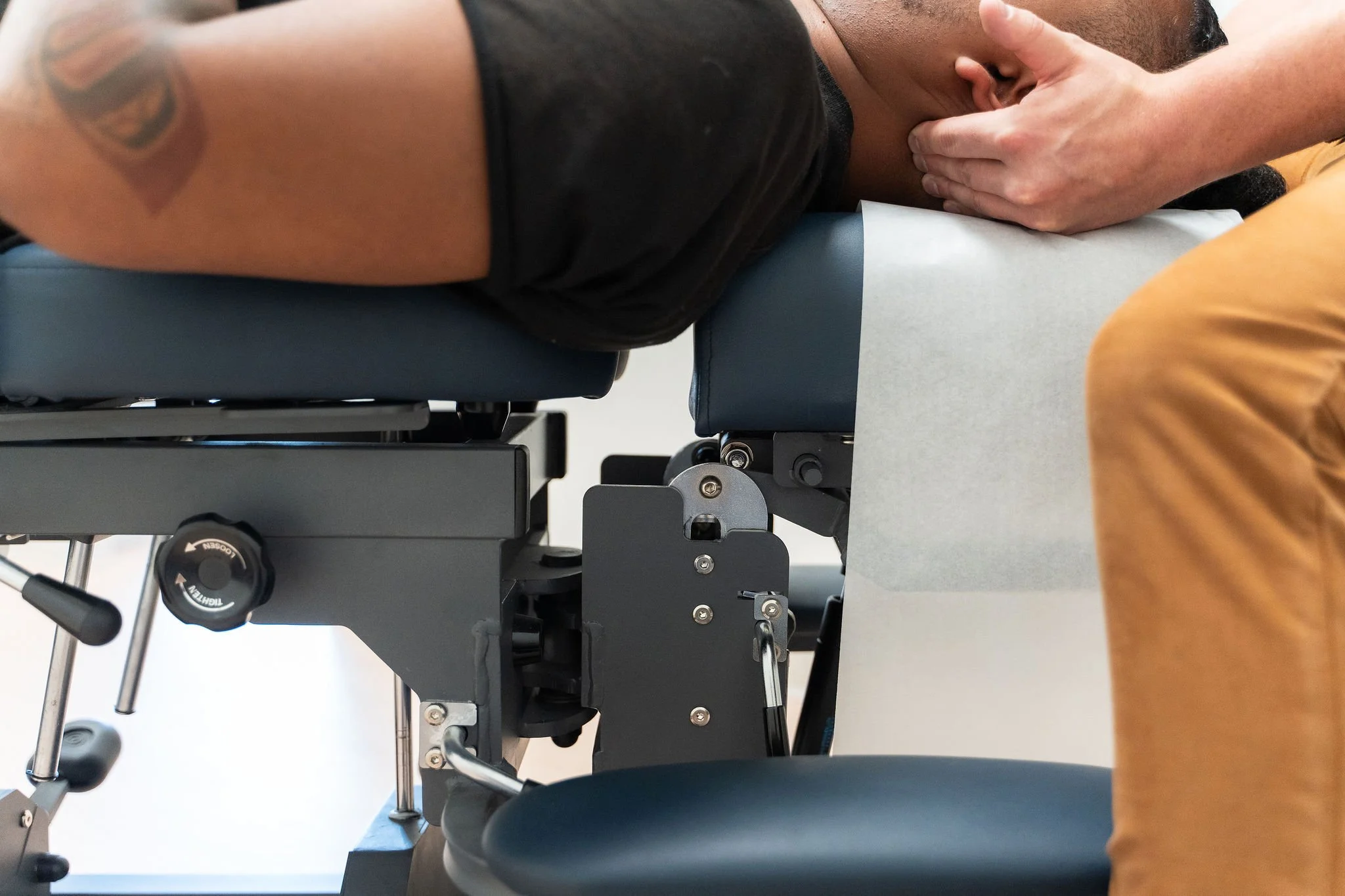
Being direct: for any of these three patterns, the sensible first step is figuring out what's actually going on rather than assuming it'll resolve on its own. Most of the October cases I see would have been much easier to address in August or September if the person had done something about it earlier.
For the summer-injury-that-lingered pattern, we look at what's actually driving the current pain — often not the original mechanism but the compensating patterns that built around it. A specific plan, some hands-on work where appropriate, some homework, and honest expectations about how long it takes.
For the pre-snow-shoveling pattern, prevention matters more than intervention. Building some resilience before the first real snowfall is a fraction of the work of recovering from a bad shoveling flare-up.
For return-to-desk and weather headaches, we sort out what's mechanical (workstation, sustained postures, muscle patterns) versus what's environmental (weather, sleep, hydration) and address what's actually addressable.
What I Tell People Every October
The main thing I want people to know: October is the transition month for Calgary bodies. Summer patterns are catching up, winter demands are approaching, and it's genuinely the last window where addressing something small keeps it small. The people I see in mid-November wishing they'd come in sooner outnumber the people who came in "too early" by a huge margin.
If you're dealing with any of these three patterns — the summer thing that won't go away, the pre-shoveling low back, the return-to-desk neck or weather-triggered headaches — an assessment is a sensible step, not an overreaction.
You don't need a referral to be seen. Axiom Chiropractic is in Hillhurst at 113 19 St NW, free parking on all sides. Book an assessment — and let's head into November with a body that's ready for what's coming.