
Do Chinooks Cause Headaches in Calgary?
You Get Headaches When The Wind Changes
If you've noticed your head pounding right as a Chinook rolls in and the temperature jumps fifteen degrees, you're not imagining it — plenty of Calgarians report exactly the same thing, and there's reason behind it.
Here's the honest answer. For people prone to migraines, Chinooks do appear to act as a trigger for some — the research points to a modest but real increase on Chinook days. They're not the whole story, though, and what actually helps is understanding your full set of triggers and managing them. Here's the practical version.

What A Chinook Is, And Why It Might Matter
Chinooks are the warm, dry winds that sweep down Calgary's side of the Rockies, often swinging the temperature dramatically in hours. They're a defining part of living here — and for some migraine-prone people, those rapid shifts in temperature and barometric pressure seem to be a trigger.
The honest framing: this is about a weather trigger in people already prone to migraines, not the wind "causing" headaches in everyone. If you're migraine-prone and Chinook days reliably set you off, that pattern is real and worth taking seriously.

What The Research Actually Says
Studies on Calgary migraine sufferers have found a modestly higher likelihood of migraine on Chinook days compared to non-Chinook days — a real effect, but a moderate one, and stronger in some groups (older adults appear more sensitive). The leading explanation is that people prone to migraines have nervous systems that react more strongly to rapid environmental change, and the sudden temperature and pressure swings of a Chinook are exactly that kind of change.
The honest takeaway isn't "Chinooks cause migraines." It's "if you're migraine-prone, a Chinook can be one trigger among several" — which is actually the more useful way to think about managing it.

Triggers Usually Stack
This is the genuinely practical point. Migraines rarely come from one thing. A Chinook plus a poor night's sleep plus a skipped meal plus dehydration is a very different situation than a Chinook on a well-rested, well-fed day. Triggers tend to add up to a threshold rather than act alone.
That's good news, because while you can't control the weather, you can control the other pieces — and lowering the rest of the load often keeps a Chinook day from tipping you over.

What Actually Helps
The most effective approach is managing the controllable triggers, especially around Chinook season.
Keep the basics steady: consistent sleep and wake times, regular meals without long gaps, steady hydration, and moderate, consistent caffeine rather than swings. Tracking your headaches against weather and these factors helps you see your own pattern and act early — treating at the first sign tends to work better than waiting.
For frequent or severe migraines, this is medical territory: your physician can discuss early-treatment and preventive options, and overusing pain relievers can itself drive rebound headaches. To be clear, chiropractors do not prescribe medication — for migraine medication strategy, that's a conversation with your doctor.

Where Chiropractic Care Honestly Fits
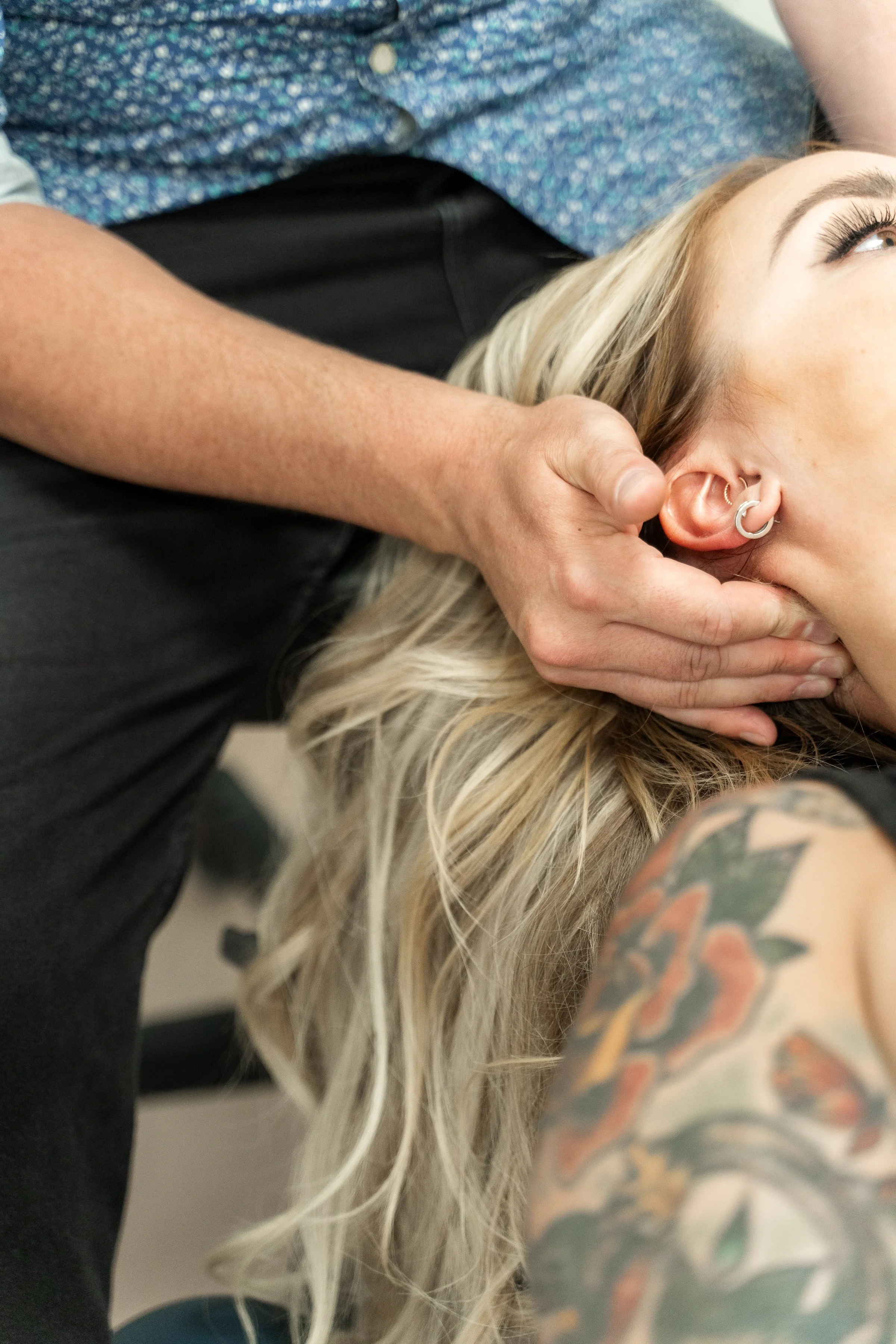
A straight answer on our role, without overreaching. Chiropractic care does not control the weather and is not a treatment for migraine as a neurological condition. Where it can genuinely help is the musculoskeletal contribution some people have: neck tension and cervicogenic or tension-type headache components that can lower your overall threshold and stack with weather triggers.
For someone whose headaches have a real neck-tension component, addressing that piece — alongside managing the other triggers and, where needed, medical care — can be a useful part of the picture. Not a Chinook cure; one honest, addressable contributor among several.
The Bottom Line
Do Chinooks cause headaches? For migraine-prone people, they appear to be a real but moderate trigger — one piece of a stacking puzzle, not a standalone cause. The leverage is in managing the controllable triggers, getting medical input for frequent migraines, and addressing any genuine neck-tension component. You can't change the weather, but you can change how much else you're carrying into it.
You don't need a referral to have the musculoskeletal side assessed. Axiom Chiropractic is in Hillhurst at 113 19 St NW, free parking on all sides. Book an assessment if neck tension might be part of what Chinook season does to your head.
Documenting the link between migraine headache sufferers and Chinooks in southern Alberta.