
How Does a Calgary Chiropractor Know Where To Adjust?
You Want To Know It's Not Guesswork
Before you let someone apply force to your spine, it's reasonable to want to know how they decide where — and to be reassured it's a deliberate process, not intuition or routine.
Here's the honest answer. It's not guesswork and it's not magic. A chiropractor identifies where to work through a structured assessment — your history, a hands-on examination, movement testing, and imaging only when it's genuinely warranted. Here's exactly how that works, so you know what's behind the decision.

It Starts With Your History
The process begins before any hands-on work, with your story. Where it hurts, what it feels like, what makes it better or worse, how it started, and your relevant medical history all narrow the field considerably.
Symptoms are informative on their own. Pain radiating down a leg points somewhere different than a stiff, localized ache; tingling into the hands suggests a different area than mid-back tightness. Your history is the first filter, not small talk.

The Hands-On Examination
This is the core of it. Palpation — feeling along the spine and surrounding muscles — lets a chiropractor assess for restricted movement, tension, tenderness, and asymmetry. A trained sense of how a joint moves, or doesn't, is genuinely informative.
Alongside that, motion and orthopedic testing show how you actually move and which movements reproduce or ease the problem. This combination — what you report plus what the examination finds — is what localizes the issue, not a hunch.

Imaging — Only When It's Warranted
Imaging has a role, but a specific one, and honesty matters here. Most musculoskeletal problems are identified well through history and examination alone. Imaging is used when something in that assessment indicates it will actually change the plan — suspected fracture, a need to confirm or rule out a specific condition, or a presentation that isn't behaving as expected.
In Alberta, chiropractic scope does include requisitioning imaging such as X-ray or MRI when clinically indicated, and we've written separately about when imaging is appropriate and how it works, including the funding nuances worth knowing. The honest principle: imaging when it answers a real clinical question, not by default.

Why Precision Actually Matters
The reason for all this care is simple: the goal is to address what's actually restricted and contributing to your problem — not to apply a generic, everywhere approach. A targeted plan based on what the assessment found is more effective and more appropriate than routine adjustment of areas that don't need it.
It's also why a responsible chiropractor adjusts the plan as you respond, and refers out when the assessment points to something outside their scope. The assessment isn't a formality before treatment — it is the thing that makes treatment appropriate.

What This Means For Your First Visit
Practically, expect your first visit to be largely assessment: a thorough history, a hands-on and movement examination, and a clear explanation of what was found and why a particular approach is recommended — before anything is done. If imaging is genuinely needed, you'll be told why. If the right answer is "this is outside what chiropractic should handle," you'll be told that too.
You don't need a referral for that assessment, and a good practitioner will walk you through their reasoning rather than just proceeding.
The Bottom Line
How does a chiropractor know where to adjust? Through a deliberate process — history, hands-on and movement examination, and imaging only when it genuinely adds something — not intuition or routine. Knowing the reasoning behind it is reasonable, and a good practitioner will happily explain it.
Axiom Chiropractic is in Hillhurst at 113 19 St NW, free parking on all sides. Book an assessment and we'll walk you through exactly what we find and why — before we do anything.
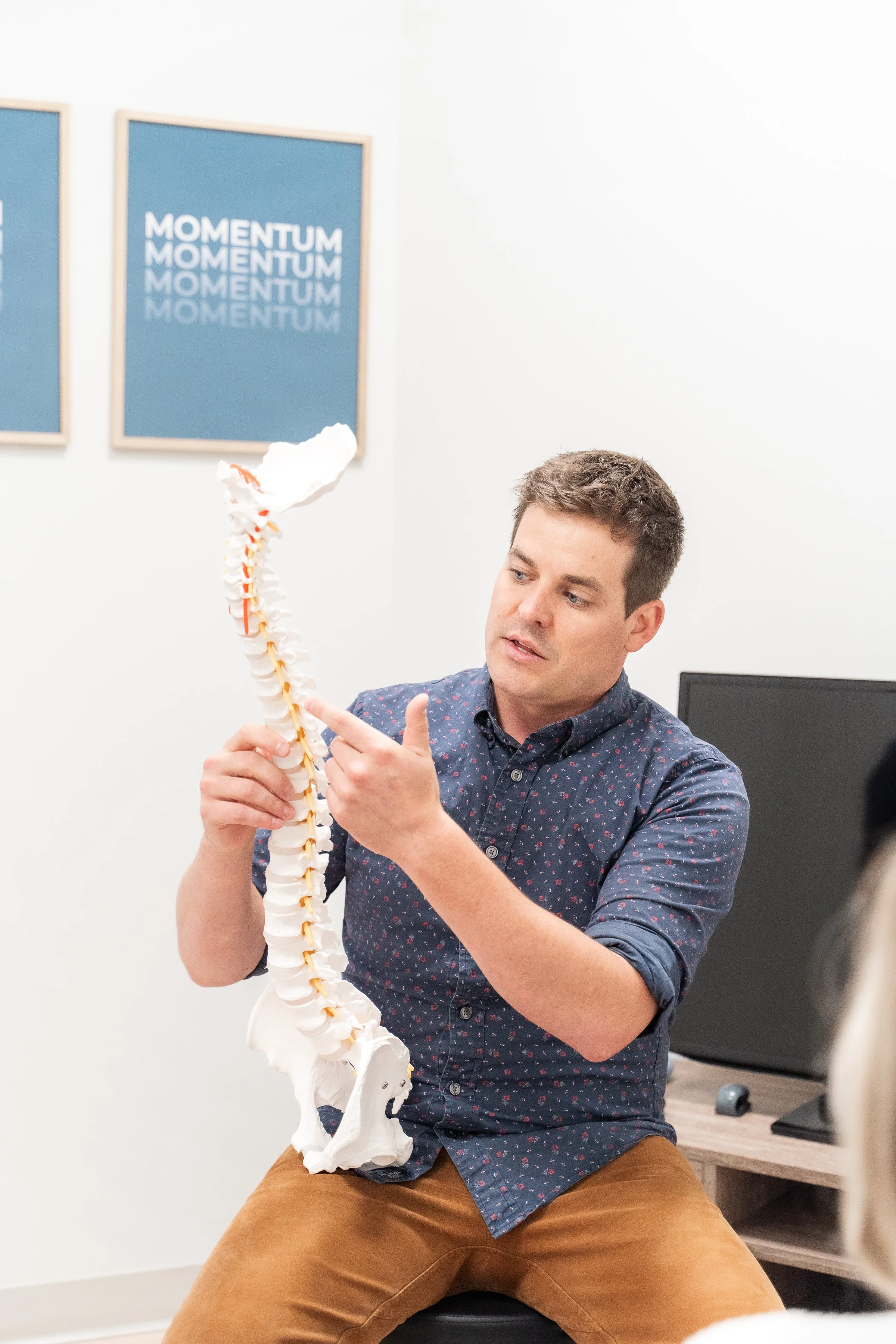
There is some mysteriousness to how chiropractic adjustments work and how chiropractors know where to adjust. In this video, Dr. O'Guin answers both of these questions. Chiropractic adjustments remove restrictions from joints, relax surrounding muscle tension, relieve pain, and improve coordination. Chiropractors know where to adjust by palpating for joint and soft tissue (muscle) restrictions.