
Hip Pain In Calgary: Causes And Care
Hip Pain Is Making Everyday Things Hard
When your hip hurts, it's not subtle — walking, stairs, sleeping, getting out of a chair all become things you think about. You want to know what's causing it and whether it gets better.
Here's the honest answer. Hip pain has several distinct causes, some mechanical and some that need medical assessment. Many mechanical hip and hip-related problems respond well to conservative care — but identifying which cause you have comes first. Let's work through it.

The Common Causes Of Hip Pain
Hip pain isn't one condition, and the causes are genuinely different from each other.
Soft Tissue And Overuse
Bursitis and tendonitis around the hip are common, often from overuse or repetitive load. These tend to respond well to conservative care once correctly identified.
Arthritis And Degeneration
Osteoarthritis is a frequent cause, especially with age — joint pain and stiffness that builds gradually. Conservative care doesn't reverse arthritis, but it can help manage pain and maintain function as part of a broader plan.
Referred Pain From The Spine
This one matters and is easy to miss: what feels like hip pain is sometimes coming from the lower back, including sciatica-type referral. Identifying whether the problem is truly in the hip or referred from the spine changes the entire approach — which is exactly why assessment comes first.
Structural And Post-Surgical
Conditions like impingement or dysplasia, and recovery after hip injury or surgery, often need medical or surgical management — with conservative care playing a supporting role in mobility and comfort within that, not replacing it.

When To Get Medical Assessment
Being straight protects you. Some hip pain needs a physician, not a chiropractor first.
Sudden severe pain after significant trauma, inability to bear weight, obvious deformity, or pain with fever or feeling unwell should be medically assessed promptly. If imaging or medication is needed, that's a physician's role — a responsible chiropractor screens for this and refers when it's appropriate.

How Chiropractic Care Helps The Mechanical Cases
For the common mechanical and spine-referred causes, conservative care aims to restore movement and reduce the irritation driving the pain.
Assessment First
Care begins by determining what and where the problem actually is — true hip joint, surrounding soft tissue, or referred from the spine. The right approach differs for each, so the examination comes before treatment.
Hands-On Care And Movement
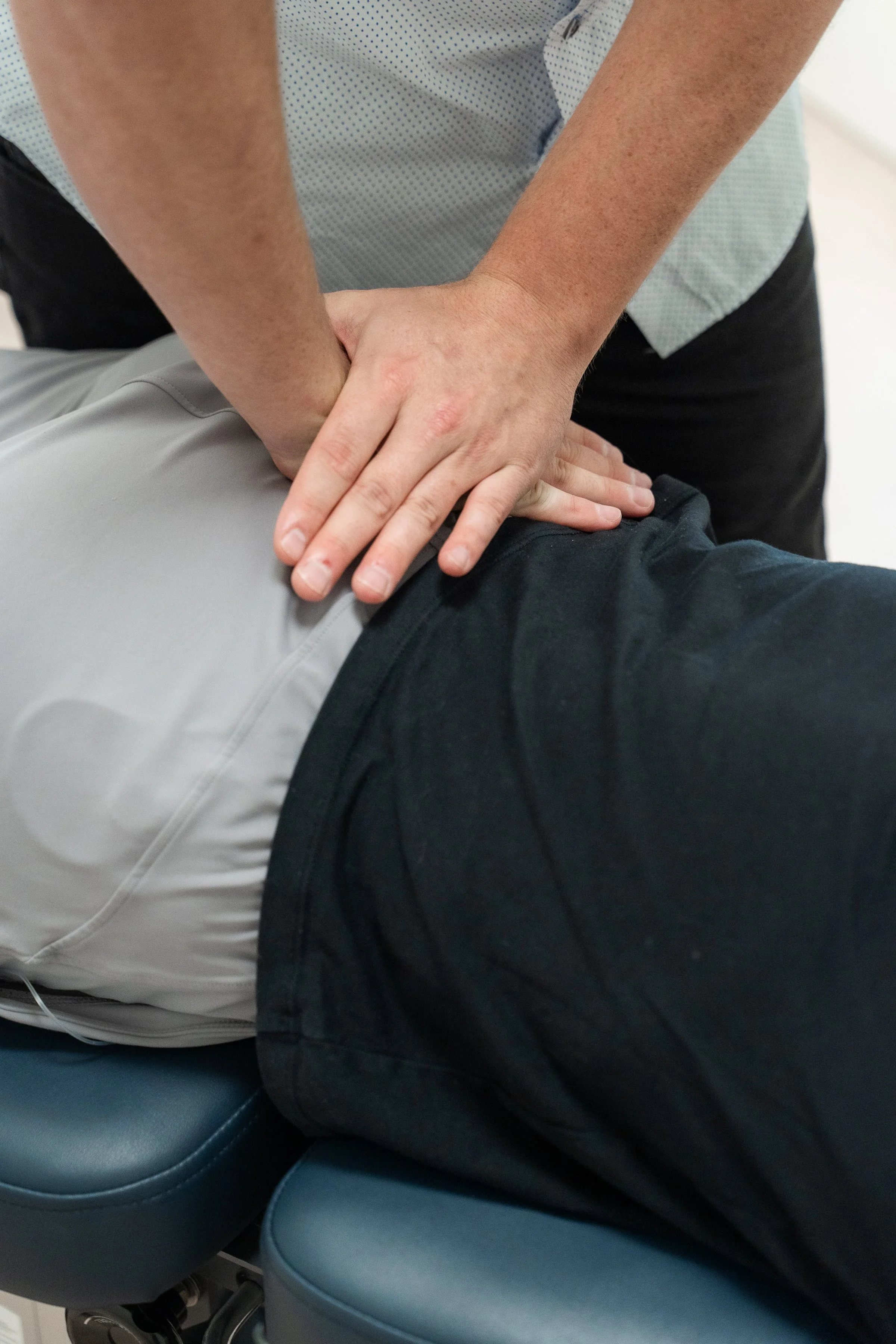
Treatment commonly includes joint mobilization, soft-tissue work, and a tailored progression of exercise to support the hip and the structures around it. Where useful, care is coordinated with physiotherapy. The number of visits varies with the cause and severity; what a course of care looks like is covered separately.
Addressing Contributors
Posture, loading habits, and movement patterns often feed hip pain — particularly the spine-referred kind. Addressing those alongside the symptom is what reduces the odds it returns.

What To Expect At A First Visit
A first visit is a proper assessment — health history, examination, and a clear explanation of what's found before any treatment. If your situation needs medical input or imaging, you'll be told that plainly rather than worked around. You can read what it costs and note that you don't need a referral to start.
The Bottom Line
Hip pain has a few genuinely different causes, and the right first step is identifying which one — including whether it's actually the hip or the spine. Many respond well to conservative care; some need medical input, and honest care means telling you which is which.
Axiom Chiropractic is in Hillhurst at 113 19 St NW, with free parking on all sides of the building. Book an assessment and let's find out what's really driving the hip pain.
Jonathan Webb, M.D., an orthopedic surgeon at Mayo Clinic Health System, provides tips that people can try to help prevent deterioration of the hip joint, as well as non-surgical options to consider to alleviate the discomfort of hip pain.