
Tinnitus And The Neck: An Honest Look

You're Hearing A Sound No One Else Can
Tinnitus — ringing, buzzing, or roaring with no external source — is genuinely wearing, especially when it affects sleep and concentration. You want honest information, not a sales pitch dressed up as one.
So here is the honest answer, stated plainly. Tinnitus is a symptom that should be assessed medically. Chiropractic care is not a treatment for tinnitus, and you should be skeptical of anyone who claims it is. There is one narrow, specific situation where a neck-related component may be relevant — and even that is framed cautiously below.

Tinnitus Is Medical First
This is the most important section, so it comes first.
Tinnitus is a symptom, not a diagnosis, and its causes range widely — noise exposure, age-related hearing change, earwax, ear infection, medication side effects, and inner-ear conditions such as Ménière's disease. Some causes are benign; some need medical management.
The correct first step for tinnitus is medical assessment — typically your physician and, often, an audiologist or ENT specialist. This is especially important if the tinnitus is in one ear only, comes with hearing loss or dizziness, is pulsatile, or appears suddenly — those features need proper medical evaluation. A chiropractor is not the right first stop for tinnitus, and a responsible one will tell you exactly that.

What Chiropractic Care Does Not Claim
Being direct here matters more than anywhere else on this site.
Chiropractic adjustments do not cure tinnitus, do not treat Ménière's disease, and "correcting spinal misalignment" is not an established treatment for ringing in the ears. Cranial sacral therapy is not an evidence-based tinnitus treatment. Any clinic presenting these as tinnitus cures is overreaching, and that's not a claim we'll make.
We're stating this plainly because the honest version protects you, and because credibility is worth more than an inflated promise.

The One Narrow, Honest Connection
There is a specific, limited situation worth knowing about — stated carefully.
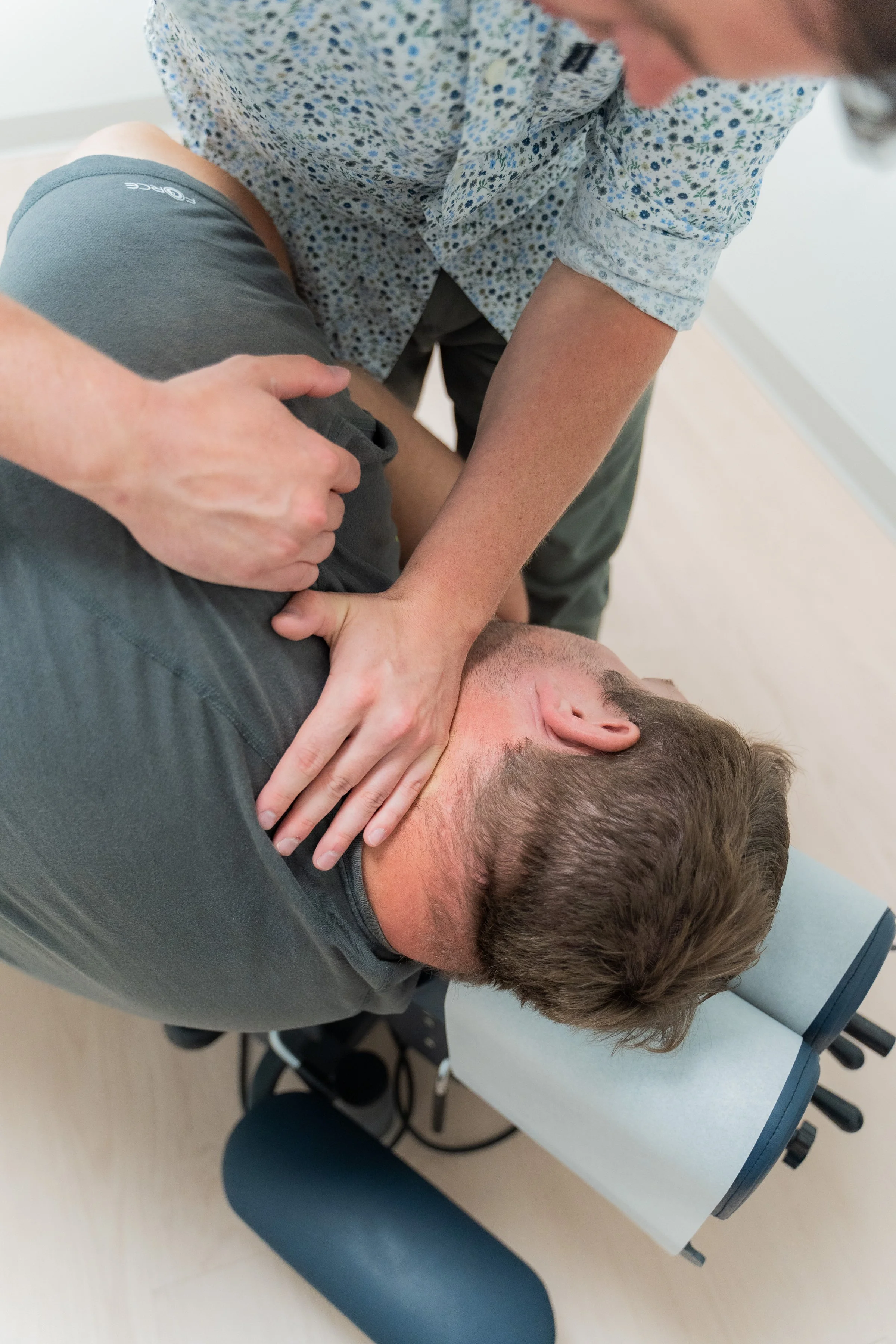
A subset of tinnitus is "somatosensory," meaning it can be modulated by the neck and jaw — for example, tinnitus that changes with neck movement or clenching, often alongside neck pain or TMJ issues. For this particular subtype, addressing the musculoskeletal neck and jaw component may help the associated discomfort — as part of a properly assessed, medically-coordinated picture, not as a standalone tinnitus cure.
That's the honest extent of it: a narrow musculoskeletal contribution to one specific subtype, alongside medical care. Not a treatment for tinnitus generally.

How To Think About Next Steps
If you have tinnitus, the right path is: medical assessment first to identify the cause and rule out anything that needs treatment. If — and only if — that work-up points to a neck- or jaw-related somatosensory component, then addressing that musculoskeletal piece can be a reasonable, complementary part of the picture.
You don't need a referral for a chiropractic assessment of a neck or jaw component — but for tinnitus itself, medical assessment comes first, and we'll say so every time.
The Honest Bottom Line
Tinnitus is medical first. Chiropractic care does not treat tinnitus — its only honest role is the narrow neck/jaw component of one specific subtype, alongside proper medical care. We'd rather tell you that clearly than sell you something that isn't real.
If you have neck or jaw issues that you suspect interact with your tinnitus, that musculoskeletal piece is something we can assess honestly. Axiom Chiropractic is in Hillhurst at 113 19 St NW, free parking on all sides. Book an assessment — and please have the tinnitus itself assessed medically.
About 1 in 5 people experience the perception of noise or ringing in the ears. It’s called tinnitus. Dr. Gayla Poling says tinnitus can be perceived a myriad of ways.