
Is A Chiropractic Adjustment Painful?
You're Considering Booking And You're Nervous About Pain
If you've never had a chiropractic adjustment and you're considering booking one, it's completely reasonable to want to know: is this going to hurt? Most people won't ask out loud, but almost everyone wonders.
Here's the honest answer up front. For most people, a chiropractic adjustment itself is not painful. Some produce a brief moment of pressure or a popping sound that can feel surprising the first time, but not pain.
Mild soreness in the day or two after — similar to how you might feel after a new workout — is common and expected.
If any of that changes, we'll walk through what to know. Here's the straight version.

What An Adjustment Actually Feels Like
An adjustment is a controlled, specific application of pressure to a joint. Depending on the technique used, it can range from a quick, precise motion (the classic "hands-on" adjustment, sometimes with a popping sound) to a gentler, low-force approach using an instrument or table-assisted movement — which produces no cracking sound at all.
What most people describe:
A brief moment of pressure or push
Sometimes a popping sound (that's gas moving inside the joint — completely normal and not "bones cracking")
A sense of release or looseness immediately after
Often relief, not pain
If you're picturing something that sounds violent, the reality is usually less dramatic than you're imagining. A skilled adjustment is quick, specific, and generally not something people describe as painful.

The Popping Sound Isn't Pain
The audible pop that sometimes accompanies an adjustment surprises people the first time. It's worth demystifying because it can sound alarming when it isn't.
The sound comes from small gas bubbles in the fluid inside a joint being released as the joint moves through its normal range — a process called cavitation. It's the same phenomenon as cracking your knuckles. It's not bones grinding, nothing shifting into place, and not a signal that anything harmful is happening.
Some techniques don't produce any sound at all — low-force and instrument-based approaches often make no noise. And whether or not a joint audibly pops isn't a measure of whether the adjustment was effective. If you'd genuinely prefer to avoid the popping sound, it's entirely reasonable to ask about gentler alternatives — we cover that in what to expect at your first visit.

Soreness After Is Normal — And Different From Pain During
Here's an honest distinction that matters. The adjustment itself is usually not painful. Some mild soreness in the day or two after can be normal — similar to how muscles feel after a new type of exercise.
What normal post-adjustment soreness looks like:
A general achiness in the area worked on
Sometimes a mild headache or feeling tired
Settling within 24 to 48 hours
Improved with gentle movement, warmth, hydration, and rest
This is the same category as workout soreness — your body responding to a new input. It's not a sign anything went wrong. If you're new to chiropractic care, having a lower-key day after your first visit is a reasonable expectation.

When Discomfort Isn't Normal
Being straight about the line: mild soreness for a day or two is expected. Anything beyond that pattern is worth flagging.
Talk to your chiropractor if you experience:
Sharp, severe, or worsening pain after an adjustment
New numbness, tingling, or weakness in a limb
Pain that lasts more than a couple of days without improving
Symptoms that are different from what you came in with
And seek emergency care immediately for any of these, especially after neck work — these are stroke and dissection warning signs worth knowing for their own sake:
Sudden severe headache (often described as the worst of your life)
Slurred speech, facial drooping, or one-sided weakness
Sudden vision changes, coordination loss, or persistent dizziness
These are rare, but they're the situations where "wait and see" is the wrong answer. We've written more on chiropractic safety and the stroke question specifically.
What Makes The First Visit More Comfortable
A few practical things help the first visit feel less unfamiliar:
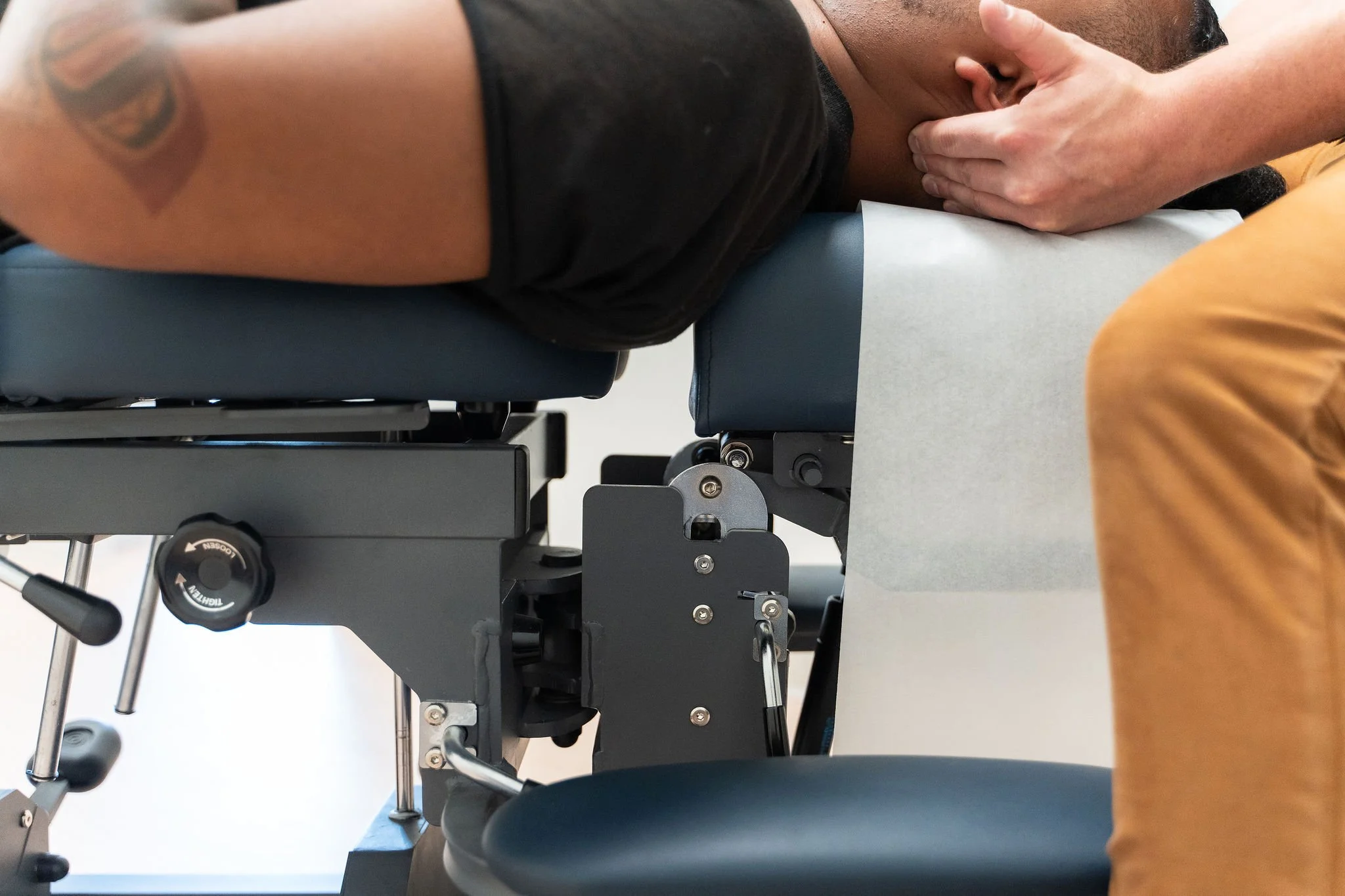
Tell your chiropractor you're nervous. A good one will slow down, explain what they're about to do, and demonstrate on themselves or with a model. This is common — you won't be the first person that day to say it.
Ask about technique options. If you'd prefer a gentler approach, especially for the neck, it's entirely reasonable to ask what's available. A responsible chiropractor will discuss the options rather than defaulting to the same technique for everyone.
Breathe. Tensing up increases discomfort more than the adjustment itself does. Slow exhale during the moment of adjustment helps.
Speak up if something feels off. During, after, at any point. Your feedback is part of safe care.

Different Techniques, Different Sensations
The word "adjustment" covers a range of techniques with genuinely different sensations:
Manual / high-velocity techniques — a quick, specific movement, sometimes with the audible pop
Low-force / instrument-based — a small, quiet click from a hand-held device delivering a precise input; no popping
Table-assisted / drop-piece — the table itself provides part of the motion; often feels gentler than a manual technique
Mobilization and soft-tissue work — slower, sustained pressure and movement rather than a quick input
Which technique fits depends on the situation, your preferences, and what a responsible chiropractor thinks is appropriate after assessing you. For someone anxious about pain or specifically about the popping sound, a low-force approach is often the sensible starting point — and asking for it is entirely reasonable.

The Honest Bottom Line
For most people, a chiropractic adjustment itself is not painful — a brief moment of pressure, sometimes a popping sound, often a sense of relief. Mild soreness in the day or two after is normal and settles quickly. Sharp or worsening pain, new numbness, or persistent discomfort is not normal and is worth flagging. And gentler technique options exist and are entirely reasonable to ask for.
If nervousness is the thing holding you back, the honest answer is that most people find their first visit less dramatic than they imagined — and a good chiropractor will meet you where you are.
You don't need a referral to be assessed. Axiom Chiropractic is in Hillhurst at 113 19 St NW, free parking on all sides. Book an assessment — tell us you're nervous and we'll walk you through everything before anything happens.