
Heat Or Ice For Low Back Pain: Which One & When?
You Have Back Pain And A Freezer And A Heating Pad
It's one of the most common practical questions in back pain, and the answer should be simple — but most articles end up listing pros and cons of each and leaving you guessing.
Here's the short version, applied to the most common situations:
Fresh flare or recent injury (first 24-72 hours): ice first
Stiffness, muscle guarding, or chronic pain (more than a few days old): heat first
Right after a hard workout, ski day, or long shift: ice immediately, then heat the next day
Sharp, fresh "tweak" with swelling-type irritation: ice
Old, dull, sit-too-long-stiffness ache: heat
That's most of it. The "why" and the practical details are below, but if you're in pain right now and want to act, that's the working rule.

When Ice Helps
Cold reduces inflammation, dulls pain signals, and helps numb a fresh irritation. It's most useful in the first 24 to 72 hours after a new injury or flare — a heavy lift gone wrong, a twist, a sudden tweak, or the early hours of a new episode.
How to use it:
10 to 15 minutes at a time
A barrier (a damp towel or thin cloth) between the ice and your skin — never ice directly on bare skin
Multiple sessions through the day, every 2 to 3 hours as needed
Never sleep on a cold pack
A bag of frozen vegetables wrapped in a damp towel works as well as any commercial product
When to switch to heat: when the sharp, swollen, irritated quality has settled and what remains is stiffness or muscle guarding — usually after 48 to 72 hours.

When Heat Helps
Heat increases local circulation, eases muscle guarding and spasm, and helps tissues move more freely. It's most useful for subacute or chronic pain — more than a few days old, dominated by stiffness or tightness rather than fresh swelling.
How to use it:
15 to 20 minutes per session for standard hot packs or heated towels
Continuous low-level heat wraps (the adhesive kind) can be worn for longer per the package directions
Moist heat — a hot shower, a warm bath, or a hot pack over a damp cloth — often feels better than dry heat
Always with a barrier between the heat source and your skin
Never sleep on heat
Pair it with gentle movement after — heat plus walking or easy mobility work compounds the benefit
When to skip heat: if the area is freshly swollen or hot to the touch, hold off on heat until that settles. Heat over fresh inflammation can make things worse.

After Activity: Ice First, Then Heat
For post-workout, post-shift, or post-ski-day soreness, the pattern is:
Right after the activity: ice for 10 to 15 minutes to limit the irritation before soreness ramps up
Day 2 (when soreness usually peaks): switch to heat plus gentle movement to nudge recovery
Day 3+: stay with heat and movement; layer in short walks (5 to 10 minutes) to keep things flowing
The combination works better than either alone for the kind of soreness that follows hard physical effort.

Combining Heat And Ice
You can absolutely use both on the same day for the same area — the typical pattern is heat for 15 to 20 minutes to loosen things up, then hours later a cold pack for 10 to 15 minutes to settle any irritation that built up. Some people prefer heat in the morning and ice in the evening, especially when there's both stiffness and lingering irritation.
What doesn't work well: alternating rapidly back and forth in the same session. Pick one for a given session, do it well, and let it have its effect.

Things To Avoid
A few specific cautions:
Don't apply heat over open wounds, rashes, or recent burns
Don't ice over areas where you have poor circulation without checking with your physician — diabetics and people with circulation issues need to be careful here
Don't use heat or ice over numb skin — the whole point of these is to feel them; if you can't, you can't tell when it's gone too far
Don't sleep on either one — the timer matters, and falling asleep on a pack is how skin burns or frostbite injuries happen
Stop if anything sharpens — numbness beyond the session, colour changes, or worsening pain mean stop and reassess

A Quick Self-Care Framework
When low back pain shows up:
Identify the kind: fresh and irritated → ice. Stiff and old → heat. Just after activity → ice now, heat tomorrow.
Time it: 10-15 minutes ice, 15-20 minutes heat, with a skin barrier
Protect the skin: always use a barrier; never sleep on either
Pair with movement: ice or heat alone helps; add gentle walking and easy mobility and it compounds
Watch for warning signs: progressive weakness, numbness in the saddle area, or loss of bladder or bowel control are urgent — see a physician or emergency, not a chiropractor
When To Get Assessed
Heat and ice are tools for self-care, not a diagnosis. Get assessed if:
Pain isn't improving with consistent self-care after a few days
Pain radiates into a leg (especially below the knee) or an arm
You have numbness, tingling, or weakness
Symptoms are recurring rather than a one-off flare
You're seeing no movement on the trajectory you expected
These patterns usually mean something mechanical that ice and heat alone won't resolve. You don't need a referral to start. We've also written about disc-related pain, low back pain in general, and when to see a chiropractor separately.
The Bottom Line
Ice for fresh injury and acute flares (first 24-72 hours). Heat for stiffness, old aches, and chronic pain. Ice immediately after hard activity, heat the next day. Short sessions, always with a barrier, paired with gentle movement. Simple framework, real relief.
If pain persists despite good self-care, that's the point to get it looked at rather than icing and heating around it indefinitely.
Axiom Chiropractic is in Hillhurst at 113 19 St NW, free parking on all sides. Book an assessment if low back pain has stopped responding to the basics.
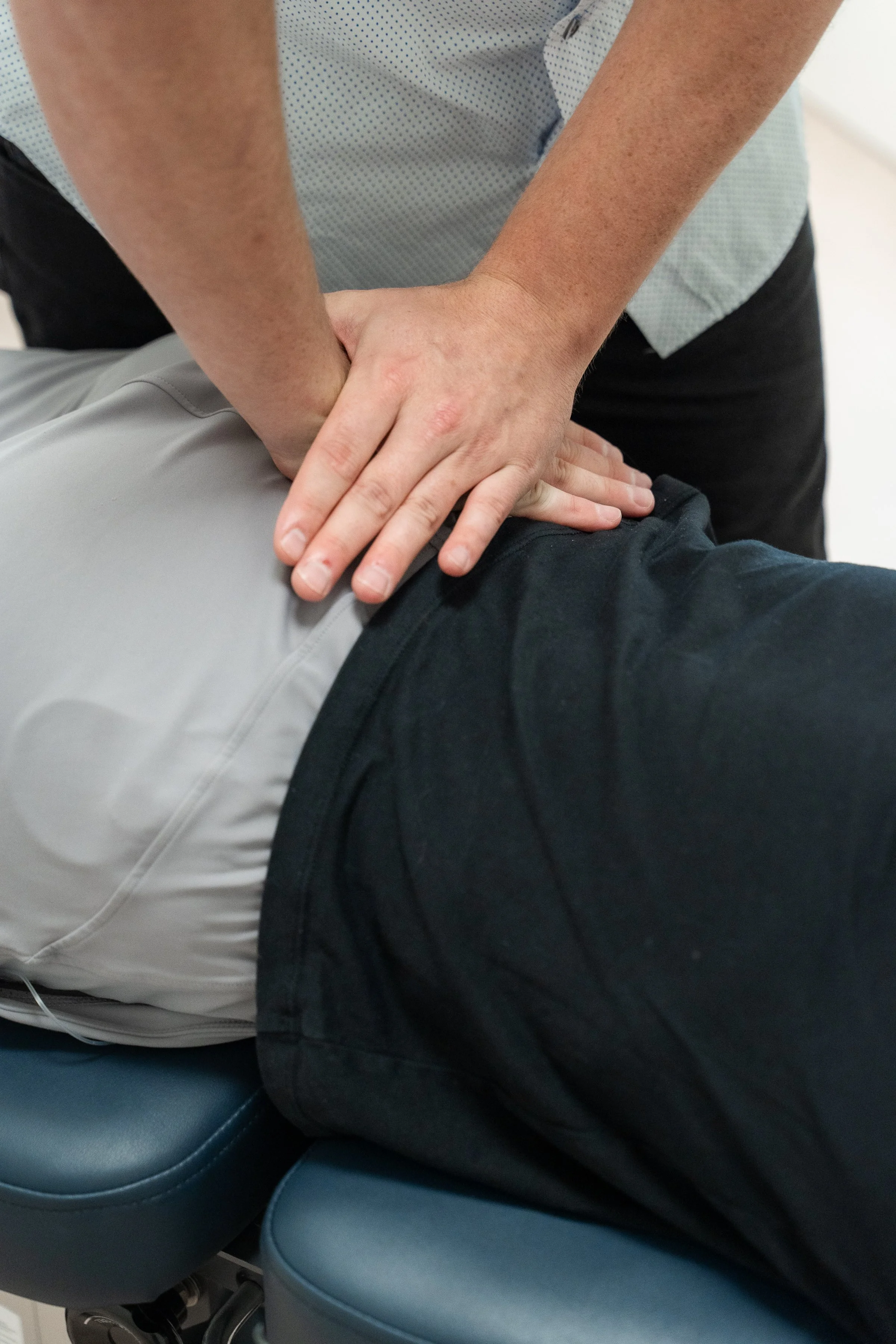
One of the most frequently asked questions I receive from people experiencing back pain is whether to apply heat or ice. For the majority of people with back pain, heat should be applied quickly after the first signs of pain.