
The Injury Everyone Sees Coming And Most People Get Anyway
Most Calgarians can predict it. First real snow of the year arrives, everyone grabs a shovel, and by evening the physiotherapy and chiropractic clinics are hearing from people who tweaked their back doing something they've done every year for a decade.
Here's the honest version. Snow shoveling is one of the most predictable injury patterns in Calgary — and one of the most preventable. Most shoveling back pain comes from a specific combination of cold muscles, unaccustomed rotational load, awkward lifting mechanics, and doing too much in a single session. All four are addressable, and the difference between a rough winter and a smooth one often comes down to how you handle the first few shoveling sessions of the season. Here's the practical guide.

Why Snow Shoveling Injures Bodies So Consistently
Snow shoveling combines several mechanical patterns that irritate backs, and it does so in cold weather when tissues are less forgiving:
The load is heavier than it looks. A single shovel of wet Calgary snow can weigh 5-10 kilos. Multiply that by hundreds of shovel-loads across a driveway and you're doing serious repetitive lifting.
The mechanics are inherently rotational. Most people shovel by scooping and then twisting to throw the snow to the side. That lift-and-twist combination is one of the most consistent back-injury mechanisms in any activity, and shoveling asks for hundreds of repetitions of it.
Cold muscles behave differently. Muscles in cold weather are stiffer, less forgiving of sudden loading, and more likely to strain. Going straight from a warm house to shoveling a driveway is exactly the setup for a cold-tissue injury.
Snow varies enormously in weight and behavior. Light fluffy powder is different from wet heavy snow, and different again from icy compacted snow at the end of the driveway. What worked yesterday might not work today.
The end-of-driveway problem. The wet heavy pile the snowplow leaves at the base of your driveway is often the heaviest snow you'll deal with, and it comes at the end of the session when you're already tired.
Cardiovascular demand is real. Snow shoveling is genuinely hard aerobic exercise, and the combination of cold air, cardiovascular exertion, and lifting produces a real cardiac risk profile — particularly for people who don't exercise regularly.

The Cardiac Warning Worth Taking Seriously
Being direct about this because it's the one shoveling risk that isn't just an MSK inconvenience. Snow shoveling is a documented cardiovascular event trigger. The combination of cold air (which constricts blood vessels and raises blood pressure), sustained upper-body exertion (which puts specific load on the heart), and the sudden physical demand for someone who may be sedentary the rest of the year is a real cardiac risk pattern.
When to reconsider shoveling yourself:
Existing cardiovascular disease or high blood pressure that isn't well controlled
Recent heart-related events or procedures
Sedentary lifestyle with sudden shift to heavy shoveling
Age 55+ without regular exercise habits
If you're in one of these categories, either hire the neighbour's kid, get a snowblower, or at minimum take frequent breaks and stop at any warning signs. Chest pain, shortness of breath disproportionate to the effort, dizziness, or nausea during shoveling warrants stopping immediately and seeking medical attention if symptoms don't resolve.

What Prevents Most Of The Musculoskeletal Injuries
The good news: most shoveling back injuries are preventable with a few deliberate habits. The specific things that matter:
Warm Up Before You Go Out
The single most under-invested habit for weekend shovelers. Going from a warm couch straight into shoveling cold snow is the setup for the acute strain.
A useful five-minute warm-up before shoveling:
2-3 minutes of light movement inside — walking around, marching in place
Torso rotations, 10 slow reps each direction
Hip circles, 10 each side
Arm circles forward and back
Some gentle squats to warm up the legs
A few gentle side bends
Warm muscles are dramatically more forgiving of loading than cold ones. The five minutes you spend warming up saves the two weeks you spend recovering from an early-season back tweak.
Use A Shovel That Fits You
A shovel that's too short forces you to bend more. A shovel that's too long makes lifting awkward. The right length is roughly one that puts the handle at chest height when the blade is on the ground.
Ergonomic considerations that actually matter:
Bent-handle shovels genuinely reduce the amount of bending required and are worth the small investment
Lightweight materials (aluminum, high-quality plastic) reduce the total load per lift
Wider blades move more snow per lift but weigh more — trade-off worth thinking about
A dedicated pusher-style shovel for light dry snow saves lifting entirely when snow is light enough to push
The right shovel for your driveway and your body is a real difference-maker across a whole winter.
Shovel Sensibly, Not Heroically
The pattern most people follow: try to clear the whole driveway in one long session. The pattern that works: break it into shorter sessions with actual breaks.
Practical pacing:
Shovel during or shortly after a snowfall rather than waiting for it to accumulate and compact
If a big snowfall is expected, shovel partway through rather than waiting for it all to arrive
Take breaks — sit down, drink water, take five minutes
Alternate arms and sides regularly — don't shovel from one side the whole time
Set a time limit for a session and stick to it
Multiple short sessions across a snowfall event beats one heroic final session by a huge margin.
Push, Don't Lift, When You Can
Pushing snow requires far less back load than lifting and throwing it. For light dry snow on a flat driveway, you can often push most of it aside without ever lifting.
Push snow ahead of you rather than lifting when the snow is light enough
Use a pusher-style shovel for light snow
Save the lifting for the snow you can't push
Move snow the shortest distance possible
Lift Properly When You Do Lift
For the snow you do have to lift, the mechanics matter significantly:
Face where you're throwing the snow before lifting. Don't lift and twist — that combination is what causes most shoveling back tweaks.
Small shovels of snow beats one heavy one. Fill the shovel less than half full and take more strokes.
Hip hinge, not spine bend. Push your hips back like sitting into a chair, bend your knees, keep your chest up. The lift should come from your legs.
Keep the load close to your body. Don't reach far to scoop.
Breathe out on the effort. Don't hold your breath.
For the fuller lifting picture, see our post on how to lift without hurting your back.
Dress The Part
Cold-weather layering matters for MSK too, not just comfort:
Warm layers keep muscles pliable
Proper boots with good traction reduce slip-and-fall risk
Gloves that let you grip properly without being over-thick
A hat and neck warmer — sustained cold on the head and neck contributes to muscle tension and headaches
Stop When Something Says Stop
The pattern most people regret: something starts hurting, they push through to finish the driveway, they wake up unable to move.
If you feel a sharp twinge, cramp, or muscle pull during shoveling — stop. Not "finish this section." Stop. Come back to it later or accept that the rest of the driveway is going to have snow on it for a bit.

What To Do When You've Already Tweaked It
If you're already reading this because you tweaked your back shoveling — the sensible early-response approach:
Stop the aggravating activity
Ice acute sharp pain for the first 24-48 hours; heat for general stiffness after
Move gently rather than lying completely still
Take over-the-counter anti-inflammatory or acetaminophen if you use them safely
Watch how it changes hour by hour — improving is the normal pattern; worsening is a signal to escalate
Most acute shoveling back pain settles within a week of returning to normal activity. What doesn't settle in that window, or comes with symptoms beyond mechanical stiffness, warrants assessment. Our post on what to do when you first hurt your back covers the fuller picture for acute back pain generally.
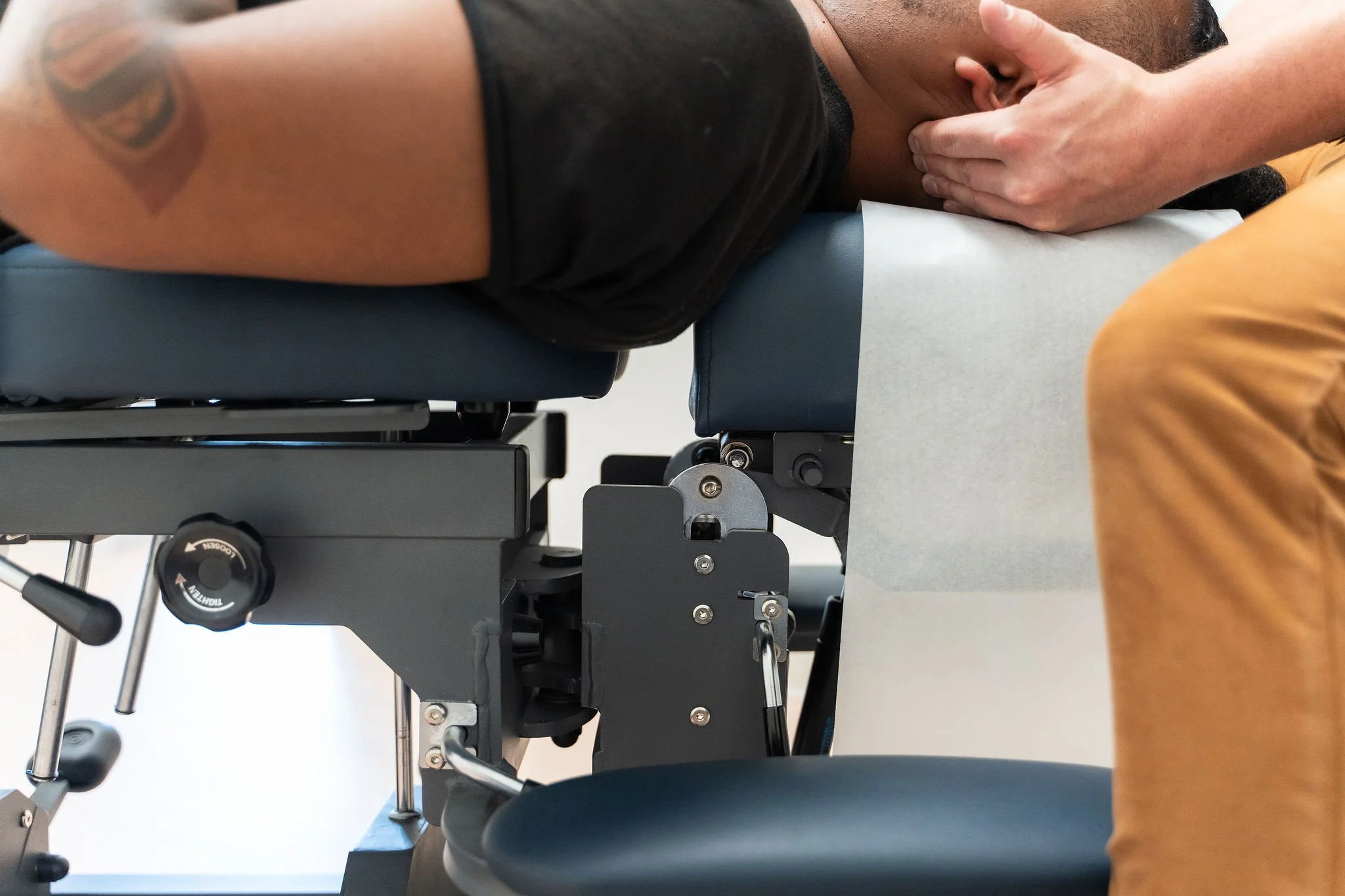
When Shoveling Pain Isn't Just Shoveling Pain
Most shoveling-related back and shoulder pain is mechanical and settles with sensible self-care. Some symptoms warrant more attention:
Pain that's clearly worsening rather than improving after several days
Numbness, tingling, or weakness in a limb — especially down a leg or into an arm
Sharp pain that changes your posture or gait
Any specific incident (a felt "pop," a specific moment things changed) with pain that continues
Chest pain, shortness of breath, or unusual fatigue — these can indicate cardiac issues rather than MSK
For any red-flag features — progressive weakness, loss of bladder or bowel function, saddle-area numbness, severe worsening pain — those are urgent medical situations rather than wait-and-see.
For chest pain, shortness of breath, or cardiac warning signs during or after shoveling — go to emergency, not a chiropractor. These are the situations where "wait and see" is genuinely dangerous.
The Long-Winter Picture
One thing worth naming: the back you injure in November shoveling often becomes the back that struggles through the entire winter. Every subsequent shoveling session becomes harder. Every drive to work becomes stiffer. By January, small early-season injuries have become chronic patterns that persist until spring.
The single best predictor of who has a comfortable winter versus a painful one isn't luck — it's whether the person addressed the small early-season issues before they built into bigger ones. A quick assessment in mid-November on a back that's been feeling off can prevent months of compounding compensation.
FAQ
How long should each shoveling session be? For most people, sessions in the 20-30 minute range are more sustainable than longer ones. Take a break, drink water, and either come back for another short session or wait for the next natural break point. Marathon shoveling sessions produce more injuries than they save time.
Is a snowblower actually better for my back? For anyone shoveling regularly through the winter, particularly with an existing back issue or cardiovascular risk factors, a snowblower genuinely reduces the physical demand. It's not cheating — it's sensible equipment. Even a modest single-stage snowblower for a small driveway makes a real difference.
What time of day is best for shoveling? Later in the morning through mid-afternoon is generally best — your body is warmer, more mobile, and better hydrated than first thing in the morning. Very early morning shoveling before your body has fully woken up is a common setup for tweaks.
Should I take pain medication before shoveling if I know my back is sore? Being direct: no, generally not. Pain is information. Masking it before physical activity means you might do more damage before feeling the warning signs. If your back is already sore, either don't shovel or shovel very conservatively — don't medicate your way into a bigger injury.
Is it worth stretching after shoveling? Yes, a few minutes of gentle mobility work after shoveling — light spinal rotations, hamstring stretches, thoracic extension — helps prevent the "wake up stiff tomorrow" pattern.
The Bottom Line
Snow shoveling injuries are among the most predictable and most preventable patterns in Calgary winter. The combination of proper warm-up, right shovel for your body, sensible pacing, pushing when possible instead of lifting, and stopping at warning signs handles most of the risk. Cardiac warning signs during shoveling deserve serious attention rather than wait-and-see. And small early-season tweaks are dramatically easier to address than the chronic patterns they become by January.
If shoveling has left you with something that isn't clearing, or you'd rather head off the recurring winter pattern before it settles in, an assessment is a sensible step. You don't need a referral to be seen. Axiom Chiropractic is in Hillhurst at 113 19 St NW, free parking on all sides. Book an assessment — and let's head into winter with a back ready for what Calgary has coming.