
What To Do When You First Hurt Your Back
You Just Did Something And Your Back Isn't Right
If you're reading this because you moved wrong an hour ago, tweaked something lifting, or woke up this morning with a back that's clearly telling you something is off — you want a clear, practical answer about what to do next. Not "listen to your body" advice.
An actual plan.
Here's the honest version. Most acute back pain — the sudden onset kind that comes from a specific movement, a lift, or an awkward moment — is mechanical, self-limiting, and settles significantly within a few days to a week with the right early moves.
What matters most is knowing what to do in the first 24-48 hours, when to keep moving versus rest, and — critically — when the pain is telling you something that needs medical attention rather than home care. Here's the practical guide.

First Twenty Minutes: Don't Panic, Don't Push Through
The instinct to test whether you can "walk it off" is understandable. But the first thing worth doing is a brief mental checklist to determine what category of situation you're actually in.
Get to a comfortable position and stop the aggravating activity. Whatever you were doing when the pain started, stop doing it. Get to a position that's tolerable — lying down with knees bent, side-lying with a pillow between the knees, or sitting supported.
Rate the pain and note what it feels like. Sharp and localized, or general and diffuse? Does it radiate into a leg or is it staying in the back? Any numbness, tingling, or weakness? These details matter for what you do next.
Check for the red flags below. Most acute back pain is not a red-flag situation, but ruling those out is the first thing worth doing.

Red Flags: These Need Medical Care Now, Not Home Care
Some situations mean this isn't just a back tweak — they need urgent medical assessment, not the wait-and-see approach. Go to your physician or emergency care same-day for any of these:
Loss of bladder or bowel control — this is the single most important one to know
Numbness in the saddle area (between the legs, like sitting on a saddle)
Progressive weakness in a leg — foot drop, worsening leg weakness, difficulty pushing off with one leg
Severe pain immediately after significant trauma — a fall from height, a car accident, a sports impact
Back pain with fever, unexplained weight loss, or a history of cancer
Pain that's dramatically worsening within hours rather than being severe but stable
These situations are uncommon in the general acute-back-pain population, but they're the ones where waiting costs you something meaningful. If any of these apply, this article isn't the right next step — a physician or emergency department is.
If none of these apply, you're most likely dealing with mechanical acute back pain, and the rest of this guide applies.

First 24-48 Hours: What Actually Helps
The old advice was bed rest. Current evidence is clear: extended bed rest usually prolongs recovery from acute back pain rather than helping. The practical approach is different.
Move gently, don't lie flat all day. Short walks around the house, gentle position changes, and normal daily movement (as tolerated) are more helpful than immobility. Two-to-three minutes of movement every 30-60 minutes is a better rhythm than either lying still or trying to push through activity.
Find positions of ease. Not every position will feel the same. Some will provide relief; others will aggravate. Common positions of ease for acute back pain:
Lying on your back with a pillow under your knees
Side-lying with a pillow between the knees
Standing with feet slightly wider than hip-width
Walking gently
Ice early, heat later. For the first 24-48 hours, brief ice application (10-15 minutes at a time, with a cloth between the ice and skin) can help reduce local inflammation and pain. After the first day or two, heat often feels better and can help ease muscle guarding. Our post on heat versus ice covers this in more detail.
Watch how it changes hour by hour. Acute back pain that's slowly improving over 24-48 hours is following a normal recovery pattern. Pain that's dramatically worsening, or new symptoms appearing (like leg numbness or weakness), is a signal to get assessed sooner rather than wait it out.

Days 3-7: Building Back To Normal
By day three, most mechanical acute back pain is meaningfully better, even if not fully resolved. The priority shifts from managing the acute phase to gradually returning to normal activity.
Increase movement gradually. Longer walks, more time upright, more normal daily activity — not all at once, but progressively.
Avoid the "test it hard" temptation. Feeling better on day three doesn't mean you should immediately do a full gym workout or move heavy furniture. Backs that are 70% recovered often reflare with too much too soon.
Return to work gradually if you can. For most people with acute mechanical back pain, some form of modified work is possible within a few days. Complete time off often isn't necessary and can slow recovery.
Gentle mobility helps. By days three to five, adding gentle spinal mobility work (cat-cow, gentle rotations, hip openers) can help ease residual stiffness. Nothing aggressive — light movement matters more than range.
Watch the trajectory. If day five looks better than day three, and day three looked better than day one, you're on the standard recovery trajectory. If the trajectory has stalled or reversed, that's information.
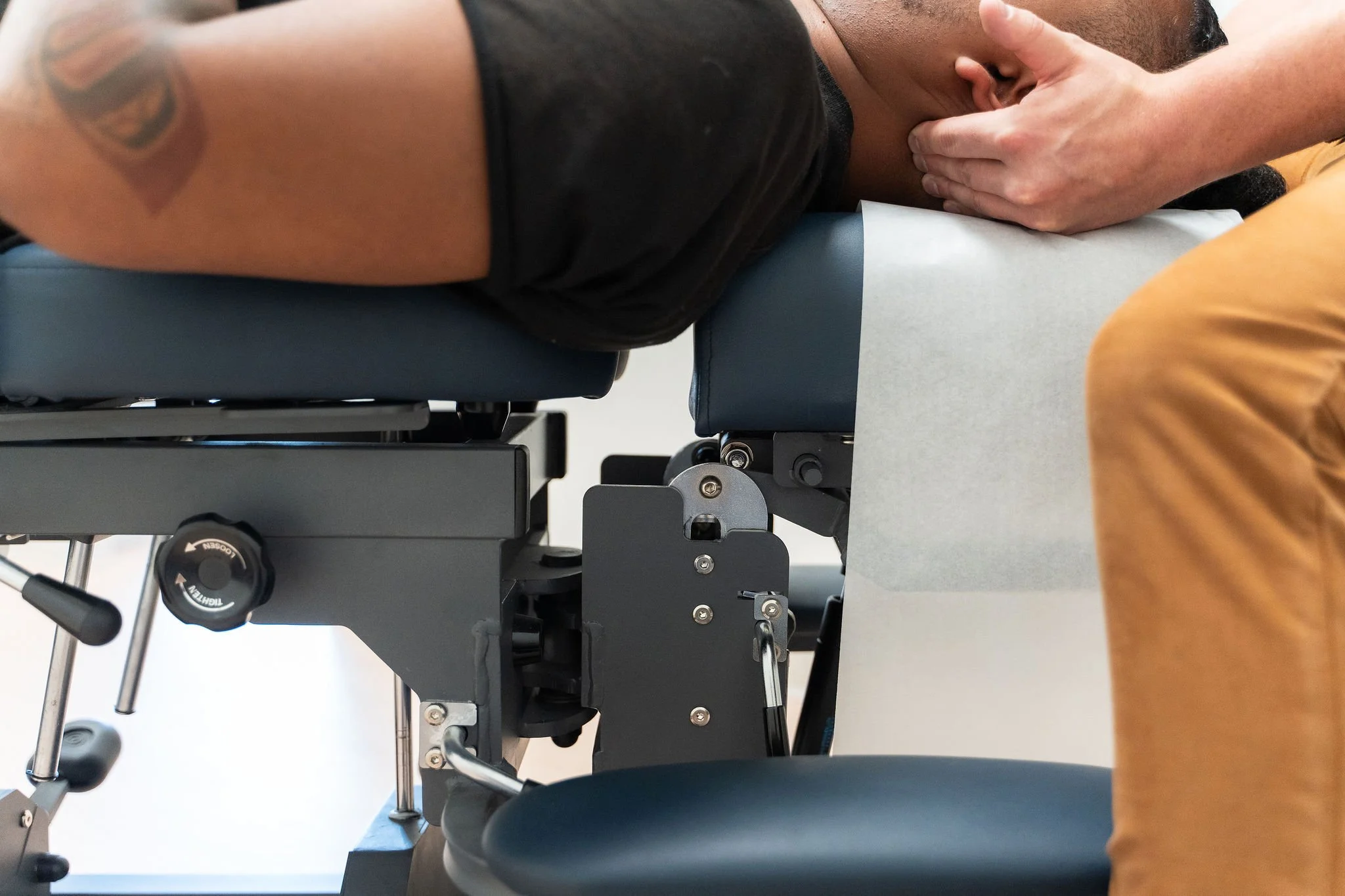
What Positions Of Ease Actually Mean
Something worth understanding: not every back pain responds the same way to the same position.
Flexion-friendly pain — pain that eases when you bring your knees to your chest, sit in a slight slouch, or curl forward. Common with muscle strains and joint irritation.
Extension-friendly pain — pain that eases when you press up on your elbows (like a gentle cobra), stand tall, or arch your back gently. Common with some disc-related patterns.
Neither, both, or unclear — for some acute pain, there isn't a clear directional preference. That's fine — general gentle movement still matters.
If a specific movement pattern reliably eases your pain, do more of it. If a specific pattern reliably makes it worse, avoid it. This isn't complicated — your back is giving you information.
When To Book An Assessment Rather Than Wait
For most acute mechanical back pain, self-care through the first week is enough. Some patterns mean an assessment earlier is worth it:
Pain that's severe enough to significantly limit daily function
Pain that's not clearly improving after 3-4 days of sensible self-care
Any radiating leg pain, numbness, or tingling — even if the back pain itself is manageable
Recurring back pain (this isn't the first time in a short period)
History of a specific incident (a lift, a fall, a specific movement) that produced the pain
You're not sure whether what you're feeling is normal recovery or something more
Assessment doesn't mean anything dramatic will be recommended. Often it means clarifying what's going on, giving you a plan for the next week, and setting expectations for what to watch for. For mechanical acute back pain, the point of getting assessed early isn't intensive treatment — it's identifying the pattern and building a specific plan rather than guessing.
We've written more on what a chiropractor can help with for low back pain and how a chiropractor determines what's going on.
Things To Avoid In The Acute Phase
Some things reliably slow recovery or reflare acute back pain:
Prolonged bed rest. Beyond a few hours of rest in the first day, immobility works against you.
Extended sitting in the wrong chair. Deep couches, soft beds, and unsupportive seating often aggravate acute back pain. A firm chair with supported low-back position is easier on a sore back than "comfortable" soft seating.
The one big workout to "loosen it up." Aggressive stretching, a full gym session, or a long run in the first week of an acute back episode typically makes things worse, not better.
Heavy lifting before you're ready. Backs that feel 80% better are not backs that can handle a moving-day or Costco run. Wait longer than you think you need to.
Ignoring escalating symptoms. Pain that's spreading, weakness that's worsening, or new neurological symptoms — these are signals to escalate, not to power through.
Panicking. Acute back pain is scary in the moment but rarely reflects the kind of catastrophic injury the pain makes it feel like. Most acute back pain resolves. Staying calm and following a sensible plan is genuinely the best approach.
The Bottom Line
Acute back pain — the sudden onset kind from a specific movement or an unexpected morning — is usually mechanical, usually self-limiting, and usually significantly better within a week with the right early moves.
The critical first check is ruling out the red-flag symptoms that need medical care. After that, the practical approach is gentle movement over immobility, positions of ease, ice early and heat later, sensible use of over-the-counter medication, and gradual return to normal activity.
What doesn't follow the standard trajectory — pain that's worsening, radiating symptoms, or a stalled recovery — means an assessment is worth booking rather than continuing to wait.
If your back isn't cooperating and you want a specific plan rather than continuing to guess, an assessment can help sort it out.
You don't need a referral to be seen. Axiom Chiropractic is in Hillhurst at 113 19 St NW, free parking on all sides.
Book an assessment — and we'll build a plan for the specific pattern you're dealing with.