
Back To The Desk: What Six Weeks Of Summer Did To Your Body
The Sitting Feels Different This Year
If you're a week or two into the return-to-desk routine after a Calgary summer full of patios, cycling, walking to work, weekend hikes, or just generally moving more than usual, and your low back and neck are noticing the shift more than they usually do — you're not imagining it.
Going from an active summer straight back into 40-plus hours of sitting a week is a genuine mechanical adjustment, and your body has been through more change than a typical week suggests.
Here's the honest version. September is when Calgary desk workers get hit with a specific compound problem: bodies that adapted to summer movement patterns are suddenly asked to hold sustained postures again, and the transition often surfaces the small mechanical issues that were being masked by activity.
It's addressable — but it takes some deliberate attention rather than assuming the body will just re-adapt. Here's the practical guide.

Why This September Feels Different
Three things happen in the transition from Calgary summer to fall desk life that compound in a way most people don't fully appreciate:
Your body adapted to being upright and moving. A summer of walking, cycling, hiking, standing on patios, and generally being vertical and active changes your hip mobility, glute engagement, and postural muscle tone. When you go back to sitting for 8-10 hours at a stretch, those adaptations don't disappear overnight — but they're being asked for something completely different, and the mismatch shows up as stiffness.
Sitting is genuinely a physical demand. People underestimate this. Sustained sitting compresses lumbar discs, shortens hip flexors, deactivates glutes, and puts the shoulders and neck into sustained forward-rounded posture. A body that spent summer moving through varied positions is being asked to hold one static position for hours.
The workstation you left in June may not be the workstation you need in September. If you were working from home during summer, you might have gotten more casual about setup — laptop on the kitchen table, phone on the couch, "I'll fix this tomorrow" for weeks. That's tolerable when you're only there for a few hours a day between activities. It stops being tolerable when it's your primary posture for eight hours a day.
Winter sedentary patterns are approaching. Even people who stay active through Calgary winters are generally less active than in summer. September is the start of that gradual reduction in daily movement, and the sitting problems that begin now often compound through the fall and winter if not addressed.

Common Patterns That Show Up In September
Being specific about what you might be feeling:
Low back stiffness in the morning. Your low back stops loving being asked to be sedentary. Morning stiffness is often the first symptom that appears.
Neck and upper back tightness by the end of the workday. Sustained forward-head posture at a screen. Often worse if the workstation setup isn't ideal.
Hip flexor tightness and hip pain. Prolonged sitting shortens hip flexors and reduces hip mobility. Standing up after long sits feels increasingly uncomfortable.
Glute weakness (the "dead butt" pattern). The glutes deactivate when you sit for hours. Over weeks, they get weaker. Low back pain and hip pain often trace back to underworking glutes.
Wrist and forearm discomfort. Sudden increased typing and mousing time after a summer of less keyboard work. Golfer's elbow and tennis elbow patterns can flare here.
Tension headaches. From sustained neck and upper back muscle loading through the workday.
A general "I feel older than I did in July" feeling. Nothing specific, just an overall sense that things aren't moving as freely as they were.
Each of these has a mechanical driver you can actually address rather than accept.

What To Do In The First Two Weeks Back
The first two weeks back at a desk are when the mechanical transition happens. Deliberate habits here make the difference between adapting well and starting a pattern that lasts through winter.
Fix The Workstation Before Anything Else
The single highest-return change most desk workers can make. If your setup isn't right, no amount of stretching will overcome it. The specific things to check:
Monitor at eye height. The top third of your primary monitor should sit at or just below eye level. If you're using a laptop as your primary screen, get it elevated (books, a riser, a stand) and use an external keyboard and mouse. Working with the laptop at the built-in low position is one of the most consistent drivers of neck pain in office workers.
Keyboard and mouse at elbow height. Elbows at roughly 90 degrees, shoulders relaxed and not creeping upward. If your keyboard is too high, your shoulders shrug all day and your neck pays for it.
Chair supporting your low back. The chair should support the natural curve of your low back. Small lumbar cushions work if the chair doesn't have proper built-in support. Feet flat on the floor (or on a footrest), hips slightly above knees.
Screens directly in front of you. Not off to one side that forces sustained rotation. If you use two monitors, either center them together or use one as primary and one as secondary that you rotate to occasionally.
Adequate lighting. Poor lighting causes people to lean forward toward screens, which increases neck load.
Ten minutes of setup fixes at the start of a week saves hours of discomfort across the rest of it.
Build Movement Back In Deliberately
The single most impactful habit for desk workers is regular short movement breaks. Not long breaks less often — short breaks more often.
Every 45-60 minutes, stand up and move for 60-90 seconds. Walk to refill your water, do a few stretches at your desk, look out a window, do a quick lap around your floor. That's it. This is the highest-return desk-worker habit that exists, and it's the one most people skip.
Change positions within the workday. Standing desks have real value if you actually use them. Alternate between sitting and standing across the day. If you don't have a standing desk, take phone calls standing or walking.
Actual lunch break away from the desk. Even 20 minutes away from your workstation, ideally walking, changes what your body deals with in the afternoon.
Get outside briefly during the day. Fall Calgary weather gives real windows for outdoor breaks. Take them when you can.
Add A Short Daily Routine
Ten minutes most days addressing what sitting does to the body. This isn't a workout — it's counteracting the specific mechanical demands of sitting.
The essentials:
Hip flexor stretches (30 seconds each side, twice daily if possible)
Cat-cow spinal mobility (6-8 slow reps)
Thoracic rotations (10 slow reps each direction)
Glute bridges (12-15 with a 2-second squeeze at top)
Wall or floor angels (10 slow reps)
A short walk if you can build it in
This handles the specific tissues that sitting stiffens or weakens. Consistency matters more than intensity — five minutes daily is better than 30 minutes twice a week.
Watch The Afternoon Slump
Around 2-3 PM most desk workers hit their worst posture of the day — head forward, shoulders rounded, chair slouched. The afternoon slump is where a lot of the cumulative loading happens.
Setting a small reminder to check your posture and take a movement break in the mid-afternoon breaks the pattern before it becomes cumulative.

The Longer Fall Habit Question
September is when winter patterns get established. If sedentary days become the default now, they become the default all winter. If active habits get built in now, they compound through the season.
Some patterns worth building deliberately in September:
A short daily walk built into the routine. Before work, at lunch, or after work. Even 15 minutes done consistently changes fall MSK patterns significantly.
Some form of resistance training. Two or three times a week, even briefly. Muscle and connective tissue adapt to load — winter without any loading input is when the "everything hurts more" pattern starts.
Regular mobility work. Twice a week, 15 minutes. Yoga, dedicated mobility routines, or just a consistent stretch session.
A commitment to the movement-break habit. The 45-60 minute rhythm, maintained through the fall.
None of this is dramatic. All of it, done consistently, changes what December feels like in your body.
When Return-To-Desk Pain Isn't Just Adjustment
Most of the transition-related stiffness settles within two to three weeks of returning to desk work with sensible habits. Some patterns mean it's not just the adjustment and warrant attention:
Pain that's clearly worsening rather than plateauing after two weeks of sensible workstation and movement changes
Numbness or tingling — in arms, legs, or fingers
Weakness in a limb
Sharp localized pain that doesn't fit the general stiffness pattern
Headaches that are new, severe, or clearly different from tension patterns
Sciatica-type pain (traveling down a leg)
For any red-flag features — progressive weakness, loss of bladder or bowel function, saddle-area numbness, severe worsening pain — those are urgent medical situations rather than adjustment issues.
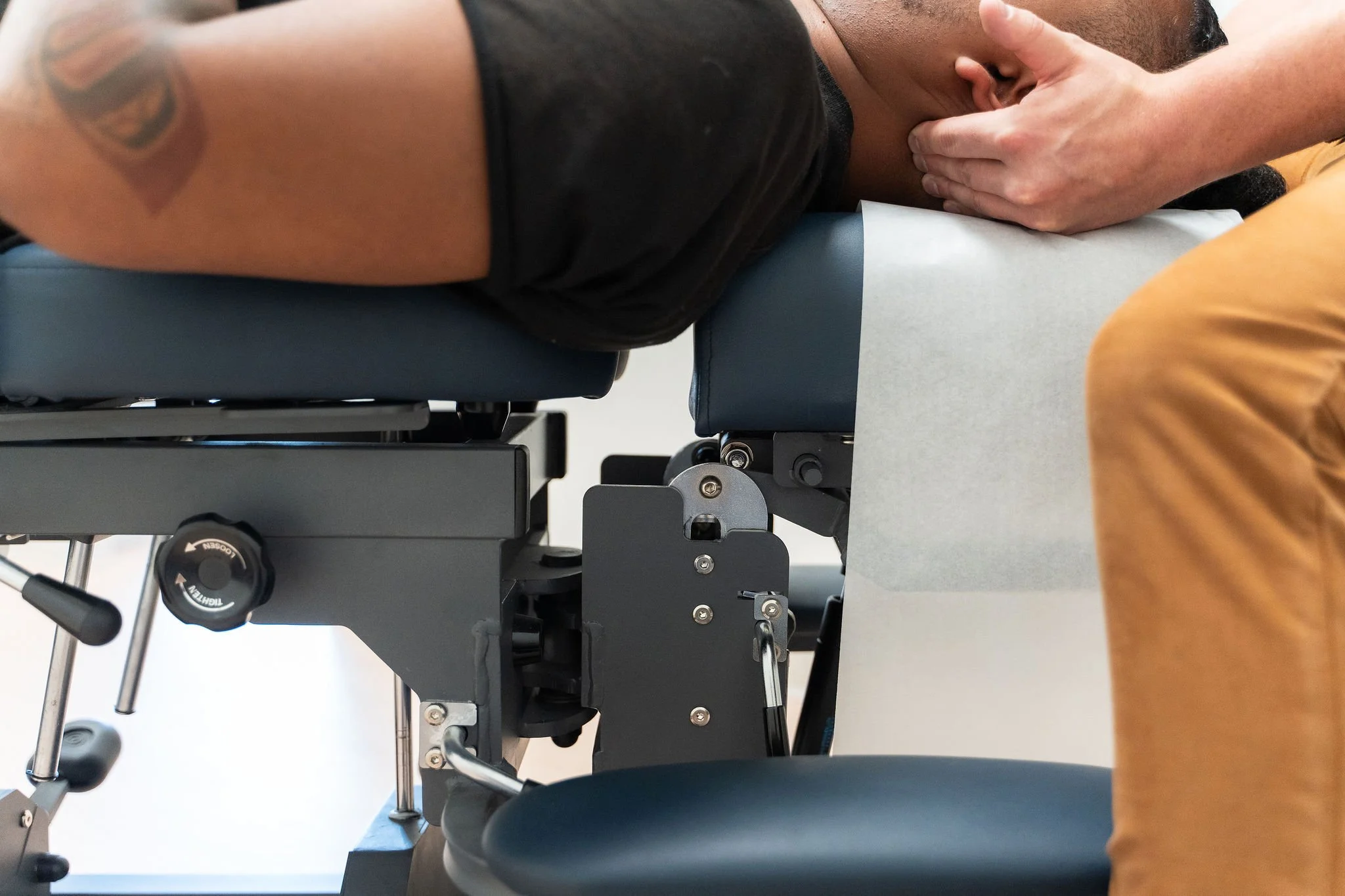
For general desk-return stiffness that isn't clearing with sensible self-care, an assessment identifies what's specifically driving it. We've written more on what a chiropractor can help with for low back pain, tech neck exercises for the neck side, and what to do when you first hurt your back if you'd like the fuller picture.
The Bottom Line
Returning to desk work after an active Calgary summer is a genuine mechanical transition, not a nothing-burger. The body has adapted to summer movement patterns and now has to readjust to sustained sitting — often in workstations that weren't optimized for daily use. Fixing the workstation, building regular movement breaks into the workday, and adding a short daily routine handles most of what shows up. September is also the beginning of winter sedentary patterns, and the habits built now determine what the whole fall and winter feel like.
If a couple of weeks back at the desk have left you with something that isn't clearing, or you'd rather get ahead of the fall pattern before it settles in, an assessment can help sort out what specifically is going on. You don't need a referral to be seen. Axiom Chiropractic is in Hillhurst at 113 19 St NW, free parking on all sides. Book an assessment — and head into fall with a body that's ready for what it's about to sit through.