
Fall Yard Work: Raking, Hauling, And Closing Up Without Wrecking Your Back
Your Yard Needs Attention And Your Back Isn't Looking Forward To It
If you're staring down a weekend of raking, cleaning up the garden beds, hauling brush, and getting the yard ready for winter, and you're already anticipating what it's going to do to your back — you're right to think about it in advance. Fall yard work is one of the biggest single-weekend physical demands most Calgary homeowners take on, and the injuries that come from it are largely predictable and largely preventable.
Here's the honest version. Fall yard work combines several of the specific mechanical patterns that irritate backs — sustained bending, repetitive rotational load from raking, awkward lifting of bags of leaves or bins of debris, and hours of work in a compressed window before the weather turns. Most fall yard injuries settle within a week or two of sensible self-care, but some settle into recurring patterns that last through winter. Here's the practical guide to getting through it.

Why Fall Yard Work Is Harder On The Body Than Spring Yard Work
Spring yard work happens across weeks as the season slowly opens up. Fall yard work happens in a compressed window between the first hard frost and actual snow, and that difference matters:
Urgency changes the pace. Late September through October in Calgary can pivot from t-shirt weather to snow in days. That urgency means people do more work in less time than they would in spring, often skipping breaks and pushing through fatigue.
The physical patterns are more repetitive. Fall work is heavy on raking (rotational, repetitive), bagging (bending and twisting under load), and hauling (walking with weight). Spring work has more variety — planting, weeding, dividing plants, general cleanup.
Cold muscles behave differently. Fall Calgary mornings are cold. Cold muscles going into physical work are more vulnerable to strain than warm muscles doing the same activity in July heat.
End-of-season fatigue. By late September, most people have already had a summer of yard work, gardening, and physical activity. Bodies aren't starting fresh — they're being asked for more from tissues that may already be worked.
Older leaves and heavier bags. Compressed leaves after rain weigh more than dry leaves. A bag that felt manageable when dry weighs significantly more when wet.

The Mechanical Patterns Worth Understanding
Different fall tasks stress the body in different ways. Being specific helps you plan:
Raking. Sustained rotational load on the low back and repetitive one-sided force through the shoulders. The classic "rake for two hours and can't stand up straight" pattern. Common site of low back tweaks.
Bagging leaves. Bending forward, scooping, twisting to bag. The bending-plus-twisting-under-load combination is one of the most consistent back-injury mechanisms.
Hauling bags and bins. Lifting weighted bags from the ground, carrying them across the yard, awkward positioning at the bin or curb. Every one of these steps has its own load pattern.
Cutting back plants and shrubs. Sustained kneeling or crouching, reaching, and rotational cutting force. Hard on knees, hips, and low back.
Cleaning gutters. Ladders plus reaching plus twisting — a specific pattern that's also one of the higher-risk fall tasks for falls and shoulder injuries.
Bringing in patio furniture and closing up outdoor equipment. Lifting awkward shapes, often at the end of an already-tiring day when form and attention are declining.

What Prevents Most Of The Injuries
Deliberate preparation and pacing make more difference than any specific technique. The practical version:
Warm Up Before You Start
The single most under-invested habit for weekend yard warriors. Five minutes of light movement before hitting the yard changes the injury profile substantially.
A useful yard-work warm-up:
2-3 minutes of walking or general movement to get blood flowing
Gentle spinal rotations, 10 each direction
Hip circles and hip openers, 10 each side
Arm circles forward and back, 10 each
A few squats to warm up the legs
Some gentle side bends
Cold body into two hours of raking is exactly the setup for the acute back tweak that ruins a weekend.
Pace The Work
The pattern most people regret: powering through the whole yard in one long marathon on Saturday afternoon.
The pattern that works: breaking the work into shorter sessions across a weekend, with actual breaks. Two 90-minute sessions with a proper rest between them, split across morning and afternoon, is far easier on the body than one 3-hour push.
Practical pacing:
Set a rough time limit for a session — 60-90 minutes is often enough
Take actual breaks — sit down, drink water, take five minutes
Alternate between different tasks rather than doing all of one task at once (raking for 30 minutes, then bagging for 20, then hauling for 15, back to raking) — variety of movement is protective
If you feel your form deteriorating, that's the signal to stop for the day, not to push through
Rake Sensibly
Raking is where a lot of fall back pain originates. Practical adjustments:
Alternate sides regularly. Don't rake for 30 minutes in one direction — switch which side is dominant every few minutes.
Use your legs, not just your arms. Step into the motion rather than reaching and pulling with just your upper body.
Keep the rake close to your body. Reaching far away multiplies the load on your low back.
Consider your rake. A properly sized rake for your height matters. Cheap short rakes force you to bend more.
Stand upright between passes. Regularly straighten up to counteract the sustained flexed position.
Watch the twist pattern. Raking is inherently rotational — the twist-under-repetitive-load pattern is what causes back strains.
Lift Bags And Bins Properly
Every full bag of wet leaves is heavier than the last one you lifted. Practical guidance:
Get the load close before lifting. Slide the bag toward you rather than lifting it at arm's length.
Squat down to the bag, don't fold forward. Hip hinge with knees bent, back straight.
Two smaller bags beats one heavy one. Fill bags less than full.
Face where you're putting the bag before lifting. Don't lift and twist to carry it — turn your whole body.
Get help for the heavy or awkward stuff. The bin at the curb, larger yard waste bags, patio furniture — not places to be a hero.
Watch the "one more trip" mentality. Fatigue causes the specific form deterioration that leads to injuries.
For the fuller lifting picture, see our post on how to lift without hurting your back.
Ladders And Roof Work: Take Them Seriously
Fall gutter cleaning, taking down outdoor lights, and any roof-adjacent work is where the fall's more serious injuries happen. Some practical considerations:
Never use a wobbly ladder or one that's too short for the task
Have someone else steady the ladder for you when possible
Don't overreach from a ladder — climb down and move it
Wet or icy ladder rungs are dangerous
If a task is genuinely too high or awkward for the tools you have, hiring someone is the right choice
Falls from ladders account for a significant portion of serious fall yard-work injuries in Canada. Wrist fractures from bracing during a fall, shoulder dislocations, and head impacts all happen.
For any head impact during yard work — even one that seems minor at the time — watch for the concussion picture over the next 24 hours. See our post on concussion.
End The Day Sensibly
The last hour of yard work is often when injuries happen. Fatigue changes mechanics.
Set a clear stopping time and stick to it rather than "just finishing this section"
Save the more physical tasks for early in the session, not late
If you're feeling something starting to bother you, stop before it becomes an injury rather than pushing through
Do some gentle mobility work at the end — a few minutes of stretching before going inside changes how you feel the next morning

Managing The First Signs Of An Issue
The pattern most people follow: back gets sore during the afternoon, they push through to finish the yard, wake up Sunday barely able to move.
The pattern that works: something starts to bother them, they finish the immediate task at hand, they stop for the day, they address the specific issue that night and the next morning.
If you're feeling something starting up:
Stop the specific task that's aggravating it
Ice acute sharp pain; heat general stiffness
Move gently rather than lying still all evening
Take a warm shower or bath before bed
Get proper sleep — bodies recover overnight
The next day, gentle movement often helps more than staying in bed
Most fall yard work back pain settles within a few days to a week of returning to normal activity. What doesn't clear in that window is worth having assessed.
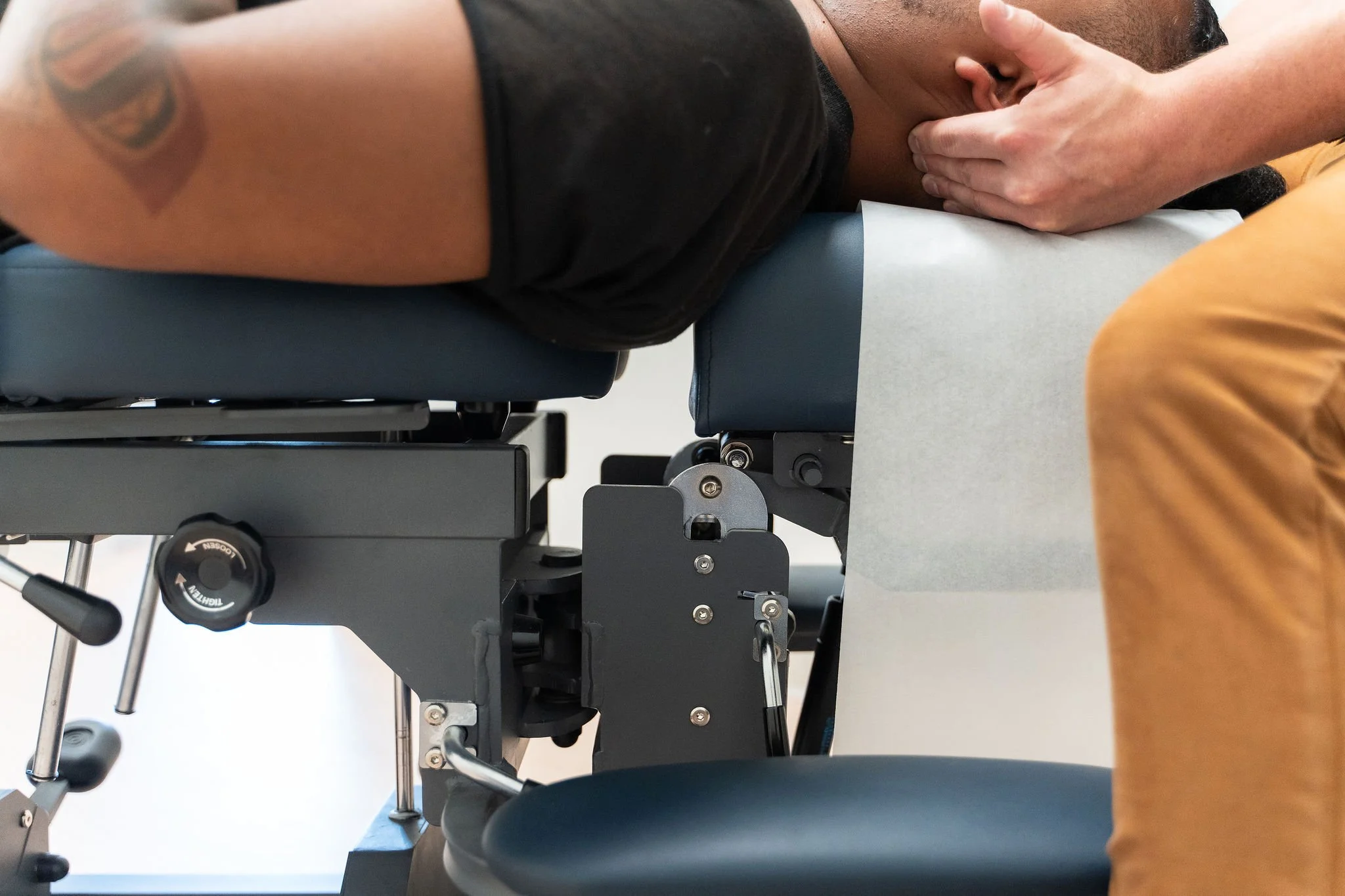
When Fall Yard Work Pain Needs Attention
Most yard-work-related back and neck pain is mechanical and settles with rest and time. Some symptoms warrant more attention:
Pain that's clearly worsening rather than plateauing after several days
Numbness, tingling, or weakness in a limb — especially down a leg or into an arm
Sharp localized pain that doesn't fit the general stiffness pattern
Any specific incident (a felt "pop," a specific moment things changed) with pain that continues
A fall with any head impact — even one that seemed minor
Symptoms that dramatically limit function
For any red-flag features — progressive weakness, loss of bladder or bowel function, saddle-area numbness, severe worsening pain, suspected fracture — those are urgent medical situations rather than wait-and-see.
For yard-work-related back stiffness that isn't clearing with sensible self-care, we've written more on what to do when you first hurt your back and heat versus ice.
The Winter Ahead
One honest observation about fall yard work and winter: the back issues that start in September often persist through the winter without deliberate attention. A back that gets tweaked closing up the yard and isn't properly addressed often becomes the back that struggles with snow shoveling in December. Sensible early intervention on fall yard injuries pays off across the whole winter.
The Bottom Line
Fall yard work is one of the biggest single-weekend physical demands most Calgary homeowners take on. The predictable injury patterns — low back tweaks from raking, lifting-related strains from bagging and hauling, and the occasional serious injury from ladder work — are largely preventable through proper warm-up, sensible pacing, and honest attention to form and fatigue. Most yard-work soreness settles within a week of returning to normal life. What doesn't settle, or shows up with neurological symptoms or after a fall, means an assessment is worth booking.
If yard work has left you with something that isn't clearing, or you'd rather get ahead of a recurring pattern before winter arrives, an assessment can identify what's specifically going on. You don't need a referral to be seen. Axiom Chiropractic is in Hillhurst at 113 19 St NW, free parking on all sides. Book an assessment — and head into winter with your back ready for what comes next.