
Running Injuries: When To Keep Training And When To Stop
You're Sore And You Have A Run Planned Tomorrow
If you're a runner dealing with a nagging pain and trying to figure out whether to lace up tomorrow or take a rest day, you want a practical answer — not "always listen to your body" advice that doesn't actually help you decide.
Here's the honest version up front. Most running injuries are on a spectrum from keep training with modifications through reduce and rebuild to stop and get assessed. The right call depends on the type of pain, whether it's worsening, and how it responds during and after a run. It's not always obvious, but there are practical patterns that help you decide. Here's the useful version.

The Three Categories Most Running Pain Falls Into
Not all running pain is the same, and treating them all the same way is what turns a minor irritation into a real injury. The rough categories:
Post-run soreness that settles. Muscle achiness after a hard workout, general fatigue, a bit of stiffness the morning after. Usually settles within 24 to 48 hours. This is normal training stimulus and doesn't need any specific intervention beyond sensible recovery.
Nagging low-grade pain that comes and goes. A specific spot — knee, shin, hip, foot — that hurts at the start of runs, sometimes eases mid-run, and comes back after. This is the category that needs the most careful thinking. Ignored, it often progresses. Addressed early, it usually resolves.
Sharp, sudden, or worsening pain. Pain that made you stop mid-run, pain that's worsening run-over-run, or pain accompanied by swelling, limping, or neurological symptoms. This is the category where continuing to train is genuinely the wrong choice.
Which category you're in largely determines what to do.

Rules Of Thumb For "Can I Run Tomorrow?"
There isn't a universal answer, but the practical framework most runners find useful:
The pain scale test. If the pain is 1-3 out of 10 during running, doesn't get worse as the run progresses, and doesn't get worse over the next 24 hours — you can usually continue running with sensible modifications. If it's 4-6 out of 10, you're in the modify-and-monitor zone. Above that, and rest is the right answer.
The limp test. If pain changes your gait — you're limping, favouring one side, or noticeably compensating — stop. Running with a compensation pattern almost always creates a second injury somewhere else.
The trend test. Pain that's steady over a week is different from pain that's clearly getting worse week over week. Steady low-grade pain can often be run through with modifications; worsening pain is a signal to pull back before it becomes something bigger.
The neurological check. Any numbness, tingling, weakness, or radiating pain going down a limb is not a "run through it" situation. Those signals need assessment before more training.

Modifications That Buy You Training Time
If you're in the middle category — nagging pain that isn't a true injury but is telling you something — modifying rather than stopping often works. The practical adjustments:
Reduce volume before intensity. Cut your weekly kilometres by 20-30% for a week. Keep some structure to your training — running is more sustainable at reduced volume than stopping entirely.
Drop the hard workouts, keep easy runs. Speed work, hills, and long runs create the most stress. Easy conversational-pace running usually stays comfortable when harder efforts don't.
Shorten individual runs. Two 30-minute runs are often better tolerated than one 60-minute run when something is bothering you.
Change the surface if you can. Rotate between pavement, dirt paths, and treadmill. Calgary's pathway system makes this easier than a lot of cities. If something specifically flares on hard surfaces, use softer ones for a few weeks.
Address what you can off the run. Foam rolling, hip and calf mobility, targeted strength for weak areas — these often make a bigger difference than any change to the running itself.
If a week of modifications resolves the issue, you were in the right category. If it doesn't, that's information — time to get assessed rather than continue guessing.

The Overuse Pattern Most Runners Recognize
Most running injuries aren't traumatic — they're overuse. And overuse injuries almost always follow a recognizable pattern: mild discomfort at first, ignored or trained through, gradually becoming more consistent, then finally forcing a stop.
The window where you can meaningfully change the trajectory is early, when the pain is still mild and intermittent. Runners who catch it there — reduce volume, address the mechanical issue, add strength — usually keep training. Runners who train through it because it "isn't that bad yet" often end up on a 6-8 week rest that could have been a 1-2 week modification.
This is genuinely the biggest single lever in running-injury management: acting on the small signal rather than waiting for the loud one.
Signals That Mean Stop And Get Assessed
Some signals mean the modify-and-monitor approach isn't the right one:
Pain that changes your running form (limping, favouring, compensating)
Sharp pain at a specific point, especially on bone
Swelling that persists between runs
Pain that wakes you up at night
Neurological symptoms — numbness, tingling, weakness, radiating pain
Pain that clearly worsens week over week despite modifications
Any acute injury (a specific "pop" or moment things changed) with pain that continues
These aren't situations where running through it is a reasonable choice. Rest, assessment, and a specific plan matter more than not missing a training week.
For the medical-emergency end — any red-flag symptoms like progressive weakness, loss of bladder or bowel function, severe pain after significant trauma, or fever with new pain — those need same-day medical care, not more training decisions.
What Assessment Actually Gives You
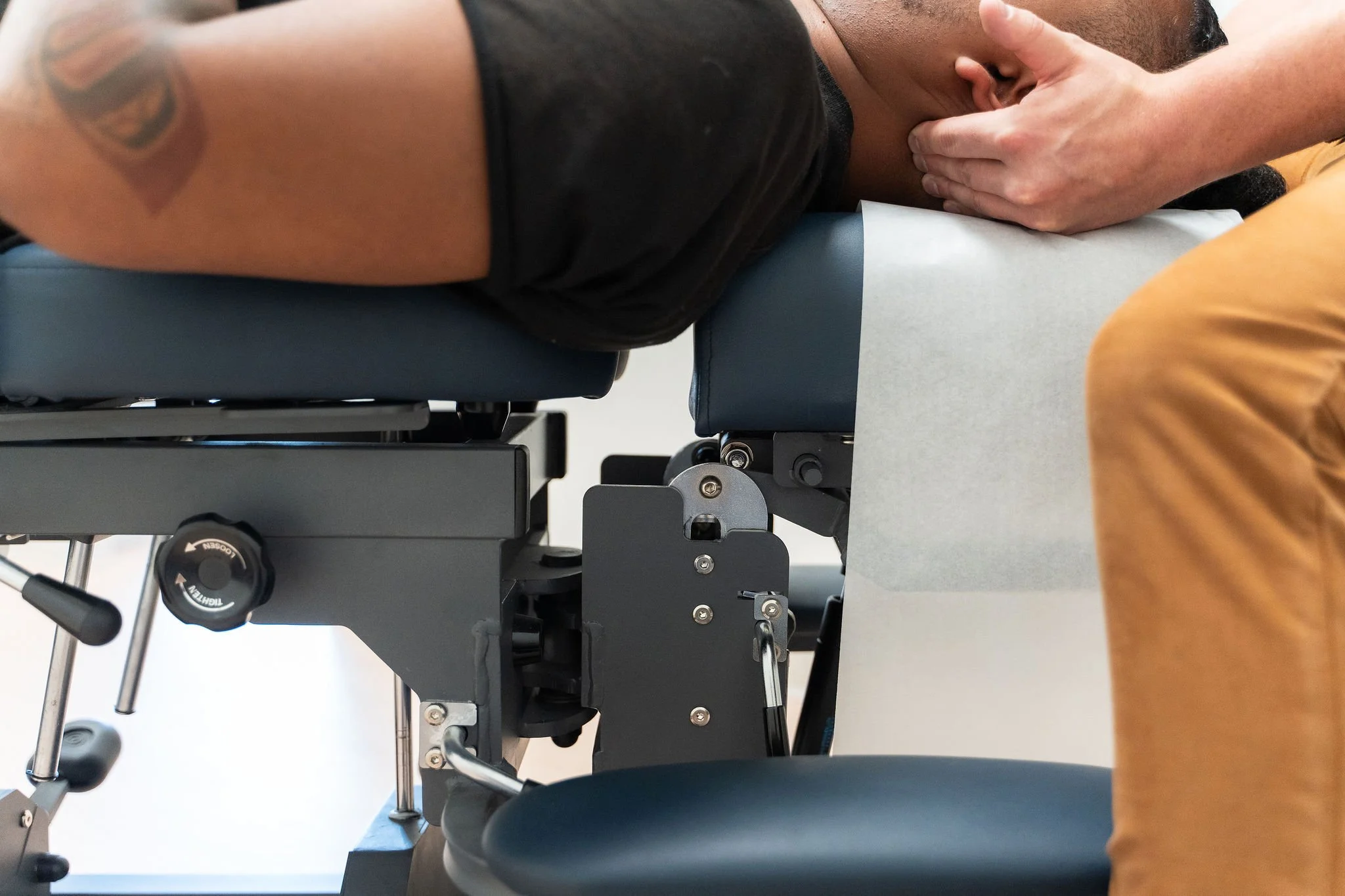
If you're in the "I should probably see someone" zone, a useful assessment for a running injury looks at more than just where it hurts. It includes:
A movement and orthopedic exam of the affected area
Looking upstream and downstream — a knee problem is often driven by hip or foot mechanics
Discussion of training load, volume, and recent changes
Screening for red flags that would mean medical care instead
A specific plan — modify, address specific mechanical issues, timeline for returning to full training
You should leave knowing what's likely going on, what to modify this week, what to work on, and roughly when to expect improvement. Vague "let's just see how it goes" isn't useful — a specific plan is.
We've written more on how a chiropractor determines what's actually involved and what a first visit looks like if you're new to this.

Calgary-Specific Considerations
Two things worth noting for Calgary runners:
The compressed season. Real outdoor running weather is roughly April through October. Runners who go from indoor treadmill volume to full outdoor training in April often overload — the surface is different, the terrain is different, the shoes may have been sitting. Ramping back into outdoor volume gradually reduces the seasonal spike in running injuries.
Terrain and elevation. Calgary's rolling terrain and mountain access make hill work and trail running accessible, both of which are harder on the body than flat pavement. If you're transitioning to hill work or trail running, treat it as new stress and build in gradually.
The Bottom Line
Most running injuries are on a spectrum. Post-run soreness that settles doesn't need anything special. Nagging low-grade pain usually responds to modifications caught early, and gets worse when it isn't. Sharp, worsening, or neurological pain means stop and get assessed. The biggest lever most runners have is acting on small signals rather than waiting for loud ones — and building off-run resilience so those small signals happen less often.
If you're mid-season and something's bothering you and modifications haven't cleared it in a week or two, an assessment usually saves you weeks of guessing. You don't need a referral to be seen. Axiom Chiropractic is in Hillhurst at 113 19 St NW, free parking on all sides. Book an assessment — and get back to the pathway with a plan that works.